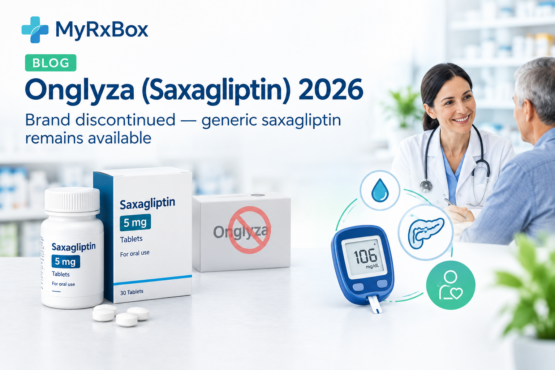
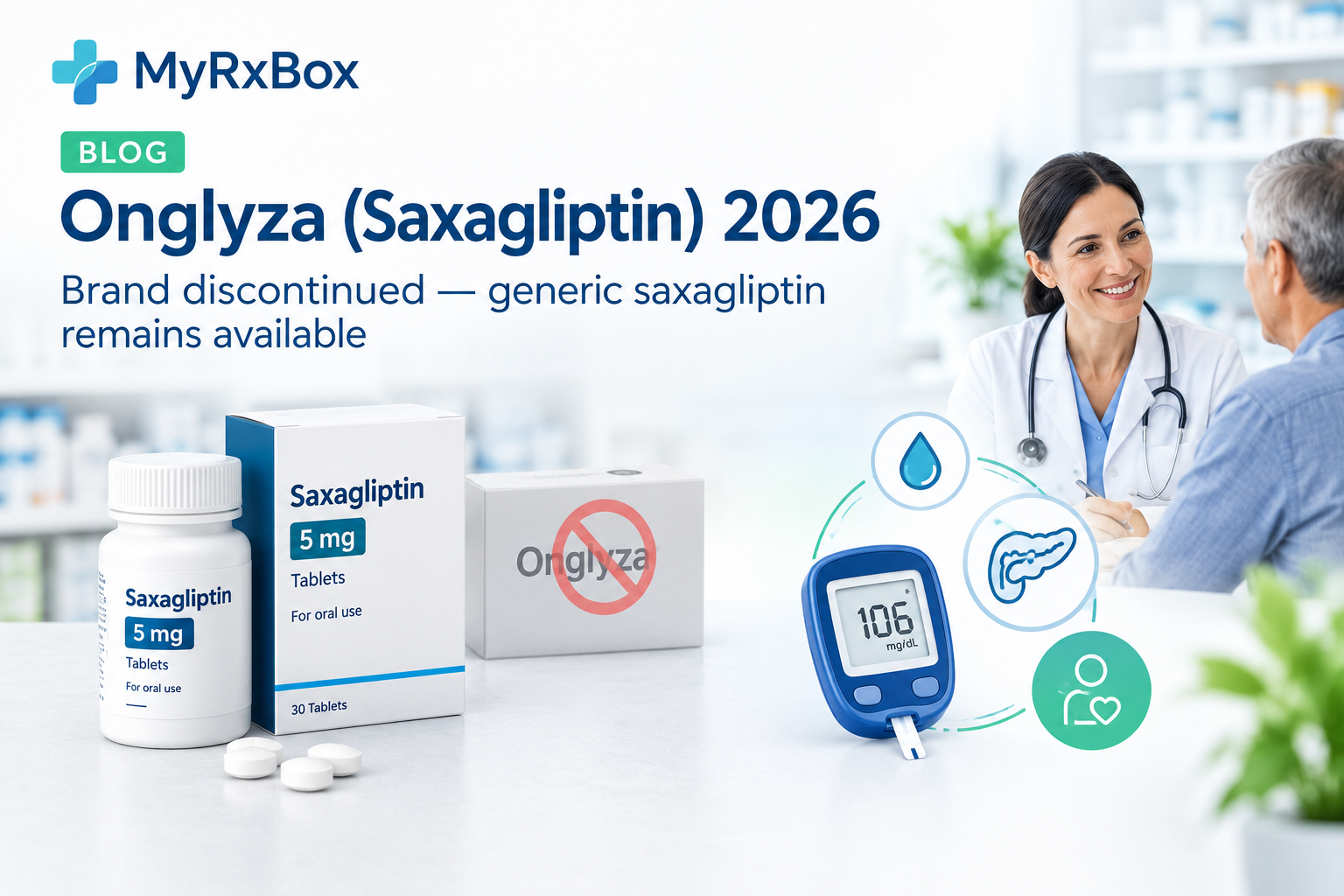
Was Onglyza discontinued because it was dangerous? Can patients still get saxagliptin? And why are doctors paying closer attention to its heart failure warning?
These are important questions for anyone taking Onglyza or considering treatment for type 2 diabetes.
Onglyza was once a widely recognized prescription diabetes medication. Its active ingredient, saxagliptin, helps reduce blood glucose by enhancing the body’s natural incretin hormone system.
But the treatment landscape has changed.
The original Onglyza brand is no longer marketed in the United States, generic saxagliptin remains available, and newer diabetes guidelines increasingly favor medications with proven cardiovascular or kidney benefits for patients who need them.
One of the most important safety findings comes from a large clinical trial involving 16,492 people with type 2 diabetes. Researchers found more hospitalizations for heart failure among those taking saxagliptin, even though the drug did not increase the trial’s primary combined rate of cardiovascular death, heart attack, or ischemic stroke.
This guide explains what actually happened to Onglyza, what the FDA found, how saxagliptin works, when dose adjustments matter, and which alternatives patients may want to discuss with their healthcare providers.
Onglyza in 2026: The Quick Answer
Onglyza is the original brand name for saxagliptin, an FDA-approved DPP-4 inhibitor used to improve blood sugar control in adults with type 2 diabetes.
The original branded tablets have been discontinued from U.S. marketing, but FDA-approved generic saxagliptin tablets remain available.
Importantly, the FDA determined that the original Onglyza product was not withdrawn from sale for reasons of safety or effectiveness.
That does not mean the medicine has no risks.
Its prescribing information carries warnings about heart failure, pancreatitis, allergic reactions, severe joint pain, and other adverse effects.
Onglyza at a glance
| Feature | Details |
|---|---|
| Brand name | Onglyza |
| Generic name | Saxagliptin |
| Drug class | Dipeptidyl peptidase-4 (DPP-4) inhibitor |
| First U.S. approval | July 31, 2009 |
| Approved use | Adults with type 2 diabetes |
| Available strengths | 2.5 mg and 5 mg |
| Administration | Once daily, with or without food |
| Kidney dose adjustment | Required for eGFR below 45 mL/min/1.73 m² |
| Major safety concern | Increased hospitalization for heart failure in SAVOR-TIMI 53 |
| Original U.S. brand | Discontinued from marketing |
| Generic saxagliptin | FDA-approved formulations available |
| Weight-loss indication | None |
Sources: FDA Federal Register Determination and DailyMed Saxagliptin Prescribing Information.
1. Why Was Onglyza Discontinued? The FDA’s Explanation
The biggest misconception surrounding Onglyza is that it disappeared from the U.S. market because regulators banned saxagliptin.
That is not what the official regulatory record says.
In December 2024, the FDA published a Federal Register determination identifying several medicines that were no longer being marketed.
Onglyza, containing saxagliptin hydrochloride in 2.5 mg and 5 mg strengths, appeared on that list.
The FDA determined that the listed medicines had not been withdrawn for safety or effectiveness reasons.
This allowed FDA-approved generic applications referencing those products to remain valid under applicable regulatory requirements.
Does that mean Onglyza was completely safe?
No.
A medicine can have serious, well-established safety warnings without being withdrawn from the market for safety reasons.
The FDA’s marketing-status determination concerns the reason the branded product ceased being marketed.
It does not erase the heart failure signal or other warnings associated with saxagliptin.
Did AstraZeneca discontinue Onglyza because of low sales?
A commercial explanation may sound plausible, particularly given the availability of generics and changes in diabetes prescribing.
However, the FDA’s determination does not establish a specific commercial reason.
Without a verifiable company explanation, it would be inaccurate to present pricing pressure, declining demand, or competition as the confirmed cause.
The verified conclusion: Onglyza’s original U.S. brand was discontinued from marketing, but FDA-approved generic saxagliptin remains an option.
Read the official Federal Register record.
2. What Is Saxagliptin, and How Does It Work?
Saxagliptin belongs to a medication class called DPP-4 inhibitors, sometimes known as gliptins.
These drugs work through incretin hormones.
Incretins are hormones released by the digestive system in response to food. Two important examples are:
- Glucagon-like peptide-1 (GLP-1)
- Glucose-dependent insulinotropic polypeptide (GIP)
These hormones help coordinate the body’s response to rising blood sugar.
However, the DPP-4 enzyme normally breaks them down relatively quickly.
Saxagliptin inhibits DPP-4, increasing the activity of naturally occurring incretin hormones.
This helps the body:
- Release more insulin when blood glucose is elevated.
- Reduce inappropriate glucagon secretion.
- Decrease blood glucose levels.
Because its effects are glucose-dependent, saxagliptin generally has a lower risk of causing hypoglycemia when used without insulin or insulin-releasing drugs.
Does saxagliptin cure diabetes?
No.
Saxagliptin helps manage blood sugar. It does not reverse the underlying disease or permanently restore normal insulin regulation.
Patients generally continue to need an individualized plan involving diet, physical activity, monitoring, and medication adjustments.
For a broader comparison of medicine classes, visit our MyRxBox Diabetes Medication Guide.
3. Onglyza 2.5 mg vs 5 mg: What Is the Difference?
Saxagliptin is available in two FDA-approved tablet strengths:
- 2.5 mg
- 5 mg
Both are used once daily.
The prescribing information recommends 2.5 mg or 5 mg daily, depending on the patient’s medical circumstances.
The lower strength is particularly important when kidney function is reduced or certain interacting medicines are used.
Saxagliptin dosage comparison
| Clinical situation | Label-based dosing information |
|---|---|
| Adults with type 2 diabetes and normal kidney function | 2.5 mg or 5 mg once daily |
| eGFR 45 or higher | Usual labeled dosing applies |
| eGFR below 45 | 2.5 mg once daily |
| End-stage kidney disease receiving hemodialysis | 2.5 mg once daily, administered after hemodialysis |
| Strong CYP3A4/5 inhibitor being used | Limit to 2.5 mg once daily |
| Children and adolescents | Safety and effectiveness not established |
Never assume that 5 mg is automatically better than 2.5 mg.
The correct dose depends on kidney function, potential drug interactions, and the prescriber’s assessment.
Can saxagliptin tablets be split?
The U.S. prescribing information directs patients not to cut, crush, or chew the tablets.
Swallow the prescribed tablet according to the pharmacy label.
Source: DailyMed — Saxagliptin Dosage and Administration.
4. Why Kidney Function Changes Saxagliptin Dosing
The kidneys play an important role in clearing saxagliptin-related drug material from the body.
When kidney function declines, drug exposure can increase.
This is why the FDA-approved labeling recommends assessing kidney function before treatment and periodically afterward.
Clinicians commonly use the estimated glomerular filtration rate, or eGFR, to help assess kidney function.
The important eGFR threshold
An eGFR below 45 mL/min/1.73 m² triggers the labeled saxagliptin dose reduction to 2.5 mg once daily.
Patients on hemodialysis require additional attention to administration timing.
The label states that saxagliptin should be administered after hemodialysis and notes that it has not been studied in patients undergoing peritoneal dialysis.
Does saxagliptin protect the kidneys?
Improving blood sugar control may be helpful as part of diabetes management, but saxagliptin has not demonstrated the dedicated kidney-protective outcomes associated with certain SGLT2 inhibitors.
The distinction matters because diabetes treatment now goes beyond lowering blood glucose alone.
For patients with chronic kidney disease, the appropriate medication may depend heavily on proven kidney and cardiovascular outcome benefits.
5. How Much Can Onglyza Lower HbA1c?
HbA1c measures the average level of glucose exposure reflected in red blood cells over approximately two to three months.
Clinical trials of saxagliptin found improvements in HbA1c compared with placebo.
Depending on the trial, baseline HbA1c, dose, and accompanying medicines, placebo-adjusted improvements were often around 0.5 to 0.8 percentage points.
These values describe averages in studied populations, not guaranteed individual results.
Example of how to interpret an HbA1c change
A reduction of 0.6 percentage points means that a measured HbA1c of 8.0% would become 7.4%.
It does not mean an 8% reduction in the blood sugar value.
This distinction is important when interpreting advertisements that describe a medicine as reducing HbA1c by a certain percentage.
Is saxagliptin powerful enough for very high blood sugar?
Not necessarily.
Patients with substantially elevated glucose levels, symptoms of severe hyperglycemia, or complex medical conditions may require more intensive treatment.
The ADA’s 2026 Standards of Care recommend considering insulin when significant symptoms are present or when HbA1c exceeds 10% or glucose is at least 300 mg/dL, depending on the clinical situation.
A DPP-4 inhibitor alone may not provide sufficient glucose lowering in these circumstances.
Sources: Saxagliptin Clinical Studies — DailyMed and ADA Standards of Care 2026.
6. The Onglyza Heart Failure Warning: What 16,492 Patients Revealed
This is the most important safety finding for patients researching saxagliptin.
The SAVOR-TIMI 53 clinical trial evaluated saxagliptin in 16,492 adults with type 2 diabetes who had established cardiovascular disease or cardiovascular risk factors.
Researchers compared saxagliptin with placebo while patients continued appropriate background care.
The trial found that saxagliptin did not significantly change the primary combined rate of cardiovascular death, myocardial infarction, or ischemic stroke.
However, it found a higher rate of hospitalization for heart failure.
The clinical trial numbers
| Outcome | Saxagliptin | Placebo |
|---|---|---|
| Participants | 8,280 | 8,212 |
| Hospitalized for heart failure | 289 | 228 |
| Percentage hospitalized | 3.5% | 2.8% |
This represents a difference of 0.7 percentage points, or approximately seven additional heart-failure hospitalizations per 1,000 patients over the trial follow-up.
The estimated hazard ratio was 1.27, with a 95% confidence interval of 1.07–1.51.
That indicates a relative increase in the rate of first hospitalization for heart failure during the study.
What does the risk mean in everyday language?
Imagine two groups of people with similar cardiovascular risk profiles.
One group receives saxagliptin, while the other receives placebo in addition to usual care.
In the trial, more people in the saxagliptin group required hospitalization for heart failure.
This does not mean 27% of users developed heart failure.
It means the relative rate of heart-failure hospitalization was higher in the group receiving saxagliptin.
Individual risk depends on multiple factors, including existing heart disease and kidney function.
Why did the FDA add a warning?
On April 5, 2016, the FDA announced new heart failure warnings for medicines containing saxagliptin and alogliptin.
The agency emphasized particular concern among patients who already had heart or kidney disease.
The warning remains clinically relevant even though the original Onglyza brand is no longer marketed.
Source: FDA-approved Saxagliptin Label — Heart Failure Warning.
7. Seven Symptoms That Should Never Be Ignored While Taking Saxagliptin
People prescribed saxagliptin should understand possible warning signs of heart failure.
Contact a healthcare professional promptly if you notice:
- Increasing shortness of breath during normal activities.
- Difficulty breathing while lying flat.
- Unexplained rapid weight gain.
- New or worsening swelling in the ankles.
- Fluid retention in the feet, legs, or abdomen.
- Unusual tiredness or weakness.
- Reduced ability to perform everyday activities because of breathlessness or fatigue.
These symptoms do not automatically mean saxagliptin is causing heart failure.
However, they require medical evaluation.
Severe breathing difficulty, fainting, or chest pain warrants emergency medical attention.
Do not abruptly stop a diabetes medicine solely because you have read about a potential risk. Contact your prescriber so that your symptoms, blood glucose control, and treatment alternatives can be assessed together.
8. Other Serious Saxagliptin Side Effects
Heart failure is only one part of saxagliptin’s safety profile.
Pancreatitis
Postmarketing reports have described acute pancreatitis in patients using saxagliptin.
Possible symptoms include severe, persistent upper abdominal pain, which may extend to the back and may occur with or without vomiting.
If pancreatitis is suspected, the prescribing information instructs clinicians to discontinue saxagliptin promptly.
Patients experiencing severe persistent abdominal pain should seek urgent medical evaluation.
Severe allergic reactions
Rare but serious hypersensitivity reactions have been reported, including:
- Anaphylaxis
- Angioedema
- Serious skin reactions
Swelling of the lips, tongue, face, or throat, particularly with difficulty breathing, can indicate a medical emergency.
Severe joint pain
The FDA has identified severe and disabling joint pain associated with DPP-4 inhibitors.
Symptoms can begin soon after treatment starts or much later.
Bullous pemphigoid
This is an autoimmune blistering skin disorder that has been reported with DPP-4 inhibitors.
New unexplained blisters or skin erosions should be assessed promptly.
Hypoglycemia when combined with other drugs
Saxagliptin usually has a relatively low hypoglycemia risk when used alone.
But that risk increases when it is used alongside insulin or insulin secretagogues such as sulfonylureas.
A prescriber may need to adjust accompanying medications.
Source: DailyMed — Saxagliptin Warnings and Precautions.
9. Common Saxagliptin Side Effects: Actual Trial Percentages
Clinical trials provide a more useful picture than simply listing every possible adverse effect.
In pooled placebo-controlled studies, the following reactions occurred in at least 5% of patients taking saxagliptin 5 mg and at a higher rate than placebo.
| Side effect | Saxagliptin 5 mg | Placebo |
|---|---|---|
| Upper respiratory tract infection | 7.7% | 7.6% |
| Urinary tract infection | 6.8% | 6.1% |
| Headache | 6.5% | 5.9% |
These numbers show that some reported events occurred at similar rates in both treatment groups.
They should not be interpreted as proof that saxagliptin caused every reported infection or headache.
Swelling was more frequent when saxagliptin was added to certain thiazolidinedione diabetes medicines.
The key lesson is to distinguish common, usually less serious adverse events from uncommon but potentially serious complications.
10. Saxagliptin vs Glipizide: Why Low Blood Sugar Risk Matters
Saxagliptin and glipizide both lower blood glucose, but they work differently.
Glipizide belongs to the sulfonylurea class and directly stimulates insulin secretion.
Saxagliptin enhances the glucose-dependent incretin response.
This difference helps explain their different hypoglycemia profiles.
In a clinical trial comparing each medicine as an addition to metformin, reported hypoglycemia occurred in:
| Treatment | Reported hypoglycemia |
|---|---|
| Saxagliptin plus metformin | 3.0% |
| Glipizide plus metformin | 36.3% |
This is a substantial difference in that particular trial.
However, it should not be assumed that every patient taking glipizide has a 36.3% chance of low blood sugar.
Actual risk depends on medication dose, food intake, kidney function, activity, and other circumstances.
The trial also does not establish saxagliptin as the best diabetes medication overall.
Treatment selection must consider cardiovascular risk, kidney disease, affordability, glucose control, and individual medical needs.
Source: DailyMed — Saxagliptin Compared With Glipizide.
11. Onglyza vs Januvia vs Tradjenta: Are All DPP-4 Inhibitors the Same?
Not exactly.
Onglyza, Januvia, and Tradjenta belong to the same general drug class, but important differences exist.
| Feature | Saxagliptin (Onglyza) | Sitagliptin (Januvia) | Linagliptin (Tradjenta) |
|---|---|---|---|
| Drug class | DPP-4 inhibitor | DPP-4 inhibitor | DPP-4 inhibitor |
| Frequency | Once daily | Once daily | Once daily |
| Main purpose | Type 2 diabetes glucose control | Type 2 diabetes glucose control | Type 2 diabetes glucose control |
| Kidney dose adjustment | Yes | Yes | Generally not required |
| Cardiovascular outcomes | SAVOR-TIMI 53 | TECOS | CARMELINA |
| Heart failure hospitalization signal | Increased in SAVOR | No significant increase in TECOS | No significant increase in CARMELINA |
| Proven heart-failure outcome benefit | No | No | No |
The American Diabetes Association’s 2026 cardiovascular guidance discusses these differences.
The important takeaway is that a saxagliptin-associated heart-failure hospitalization signal should not automatically be treated as an identical finding for every drug in the DPP-4 class.
At the same time, an alternative DPP-4 inhibitor is not necessarily the most appropriate choice for someone with established cardiovascular or kidney disease.
Never substitute one DPP-4 inhibitor for another based only on a comparison chart.
Sources: ADA Cardiovascular Disease and Risk Management — 2026 and Januvia Official Prescribing Information.
12. Saxagliptin vs Metformin: Which Is Better?
Metformin and saxagliptin work through different biological pathways.
Metformin primarily reduces liver glucose production and improves aspects of insulin sensitivity.
Saxagliptin inhibits the DPP-4 enzyme, increasing incretin hormone activity.
For many adults, metformin remains an important, well-established treatment option.
However, contemporary guidelines do not require every patient to begin with metformin regardless of their cardiovascular or kidney conditions.
A patient with chronic kidney disease or heart failure may benefit from an SGLT2 inhibitor with demonstrated outcome benefits.
A patient with obesity or certain cardiovascular risks may benefit from an appropriately selected GLP-1 receptor agonist or other recommended treatment.
Can saxagliptin and metformin be taken together?
Yes, the combination has been studied and prescribed for selected patients.
A former branded extended-release combination, Kombiglyze XR, contained saxagliptin and metformin.
Its original branded formulations are also listed as discontinued from U.S. marketing.
However, the clinical suitability of combined treatment should be determined by a prescriber.
Metformin brings its own kidney-function restrictions and precautions, which are different from those of saxagliptin.
13. Saxagliptin vs Rybelsus: What Changed in Modern Diabetes Treatment?
One of the most important developments in diabetes care is the growing use of GLP-1-based therapies.
Rybelsus contains oral semaglutide, a GLP-1 receptor agonist.
Saxagliptin and semaglutide both interact with the incretin system, but through very different mechanisms.
Key differences
| Feature | Saxagliptin | Oral semaglutide (Rybelsus) |
|---|---|---|
| Drug class | DPP-4 inhibitor | GLP-1 receptor agonist |
| Mechanism | Reduces incretin hormone breakdown | Directly activates GLP-1 receptors |
| Administration | Once-daily tablet | Once-daily tablet |
| Food requirements | With or without food | Special empty-stomach administration |
| Effect on weight | Generally weight-neutral | Can reduce body weight |
| Glucose-lowering efficacy | Usually modest | Generally greater |
| Heart-failure warning | Specific concern for saxagliptin | Different drug-specific safety profile |
Can Rybelsus replace Onglyza?
For some patients, switching to GLP-1-based treatment may be appropriate.
But the medicines are not interchangeable tablet for tablet.
They differ in dosing, contraindications, side effects, cost, clinical indications, and administration requirements.
Learn more in our Rybelsus 3mg vs 7mg vs 14mg Guide and Complete List of GLP-1 Medications.
Can saxagliptin be taken together with Rybelsus?
This is a particularly important question.
The ADA’s 2026 Standards of Care do not recommend using a DPP-4 inhibitor together with a GLP-1 receptor agonist or dual GIP/GLP-1 receptor agonist.
The reason is that combining them generally does not produce meaningful additional glucose lowering beyond the GLP-1-based treatment.
Patients already prescribed both should ask their clinician to review the regimen rather than discontinue medicines independently.
Source: ADA Standards of Care 2026 — Pharmacologic Approaches, Recommendation 9.18.
14. Why Are SGLT2 Inhibitors and GLP-1 Drugs Often Preferred in 2026?
Diabetes treatment is no longer judged exclusively by how much a medicine reduces HbA1c.
Current clinical recommendations consider whether treatment can also help prevent important complications.
For patients with appropriate indications, medications from the SGLT2 inhibitor and GLP-1 receptor agonist classes have demonstrated benefits extending beyond blood sugar control.
Depending on the individual medicine and patient population, these may include:
- Reduction in cardiovascular events
- Reduction in hospitalization for heart failure
- Slowing the progression of chronic kidney disease
- Improvement in weight-related outcomes
Not every medicine in these classes has identical approved indications or clinical trial evidence.
Where does saxagliptin fit?
Saxagliptin may remain an option when a clinician determines that a DPP-4 inhibitor is appropriate.
Potential considerations include its oral administration, generally weight-neutral profile, and relatively low hypoglycemia risk when not combined with insulin or insulin secretagogues.
However, saxagliptin does not have the proven cardiovascular or kidney-protection advantages that drive the selection of particular SGLT2 inhibitors or GLP-1 treatments.
People with heart failure, chronic kidney disease, obesity, or established cardiovascular disease should ask whether their current treatment aligns with contemporary guideline recommendations.
Source: American Diabetes Association — 2026 Standards of Care.
15. Is Generic Saxagliptin Still Available in the USA?
Yes.
FDA-approved generic saxagliptin tablets are listed in the United States.
The National Library of Medicine’s DailyMed database includes prescription labeling for products supplied by generic manufacturers.
For example, Glenmark Pharmaceuticals has a U.S. saxagliptin label covering 2.5 mg and 5 mg tablets.
Brand vs generic: what changes?
FDA-approved generic medicines must satisfy applicable quality and bioequivalence requirements.
Their active ingredient, route, and approved conditions of use must meet the regulatory requirements for the reference product.
Differences may exist in:
- Tablet appearance
- Inactive ingredients
- Manufacturer
- Packaging
- Pharmacy price
- Insurance coverage
The original Onglyza brand’s discontinued marketing status does not mean all saxagliptin prescriptions must be discontinued.
Patients should speak with their pharmacist about an appropriately approved generic product.
Read the MyRxBox Saxagliptin Medicine Glossary for a concise explanation of the active ingredient.
16. How Much Does Generic Saxagliptin Cost in 2026?
Cost is one of the reasons patients search for generic saxagliptin.
However, a reliable price comparison must distinguish between several different prices.
Wholesale acquisition cost
This represents a pricing benchmark within the pharmaceutical supply chain. It is not necessarily what a patient pays.
NADAC
The National Average Drug Acquisition Cost survey estimates pharmacy acquisition costs for eligible drugs based on participating pharmacy data.
It is useful for understanding reimbursement and acquisition-cost trends, but NADAC is not a guaranteed consumer retail price.
Retail cash price
This is what a pharmacy may charge a patient without applying insurance benefits or discounts.
It varies between pharmacies.
Insurance price
The final amount depends on formularies, deductibles, copayments, and other plan conditions.
Discount-card price
A discount program may reduce a quoted cash price, but savings depend on the pharmacy, product, and program.
A generic medicine with a relatively low acquisition cost is not automatically the cheapest medicine at the checkout counter.
To compare saxagliptin expenses, patients should request quotes for the same strength, quantity, and manufacturer-equivalent product.
Ask a licensed pharmacy about insurance coverage, approved generic substitution, and available savings programs.
The medication should not be changed solely to obtain a lower price without checking clinical suitability.
17. Drug Interactions: Which Medicines Require Extra Attention?
Saxagliptin is metabolized in part through the CYP3A4/5 enzyme pathway.
Medicines that strongly inhibit this system can increase saxagliptin exposure.
The FDA-approved label recommends limiting saxagliptin to 2.5 mg once daily when it is used with strong CYP3A4/5 inhibitors.
Examples of medicines or medication groups that may require interaction review include:
- Ketoconazole
- Clarithromycin
- Certain HIV treatments containing ritonavir
- Other strong CYP3A4/5 inhibitors
The exact significance depends on the specific product and regimen.
Insulin and sulfonylurea medicines also require attention because of potential hypoglycemia.
Before starting saxagliptin, tell your clinician about every prescription medication, over-the-counter product, vitamin, and supplement you use.
Patients should never assume that two medicines are safe to combine simply because they treat different conditions.
18. Who Should Avoid Saxagliptin or Request a Special Safety Review?
The formal contraindication in the U.S. label is a history of serious hypersensitivity to saxagliptin or its ingredients.
However, a broader medical assessment is particularly important for patients with:
- Existing heart failure
- Significant cardiovascular risk factors
- Kidney impairment
- A history of pancreatitis
- Previous severe reactions to DPP-4 inhibitors
- Pregnancy or plans to become pregnant
- Breastfeeding
- Multiple prescription medicines that may interact
Can children take saxagliptin?
Saxagliptin’s safety and effectiveness have not been established in pediatric patients.
A study involving 164 young people aged 10 to 17 years with type 2 diabetes did not demonstrate effectiveness.
This reinforces the importance of checking age-specific approval rather than assuming an adult diabetes medication is appropriate for children.
What about older adults?
Older age alone does not automatically determine the dose.
Kidney function, other medical conditions, potential interactions, and vulnerability to adverse events are important considerations.
Source: Official Saxagliptin Prescribing Information.
19. What Should Patients Do if They Cannot Find Onglyza?
If your usual pharmacy can no longer supply branded Onglyza, do not panic or independently change treatment.
Use this practical checklist.
Step 1: Confirm the active ingredient.
Check whether your prescription specifies Onglyza or saxagliptin.
Step 2: Confirm the strength.
Determine whether your prescribed dose is 2.5 mg or 5 mg.
Step 3: Ask about FDA-approved generic saxagliptin.
A pharmacist can assess the prescription, available generic products, and applicable substitution rules.
Step 4: Review kidney function and drug interactions.
Do not assume that the original prescription remains appropriate if your kidney function or accompanying medications have changed.
Step 5: Discuss newer treatment options.
If you have heart failure, kidney disease, or cardiovascular disease, ask whether an SGLT2 inhibitor or GLP-1-based therapy with proven benefits may be more suitable.
Step 6: Confirm the pharmacy’s credentials.
Patients in the United States should use appropriately licensed pharmacies that follow applicable prescription requirements.
Avoid websites that promise prescription medicines without a legitimate medical or dispensing process.
For additional information, explore our Diabetes Care Category.
20. Seven Common Myths About Onglyza
Myth 1: Onglyza was banned by the FDA.
Fact: The original brand was discontinued from marketing. The FDA determined that it had not been withdrawn for safety or effectiveness reasons.
Myth 2: Generic saxagliptin must be less effective.
Fact: FDA-approved generics must satisfy applicable quality and bioequivalence standards.
Myth 3: Saxagliptin causes heart failure in everyone.
Fact: The SAVOR-TIMI 53 trial identified an increased rate of hospitalization for heart failure, not a universal outcome.
Myth 4: Saxagliptin protects the heart because it lowers glucose.
Fact: Glucose lowering alone does not establish cardiovascular protection. Saxagliptin has not demonstrated the cardiovascular outcome benefits associated with certain newer diabetes medicines.
Myth 5: Saxagliptin is just a cheaper version of Ozempic or Rybelsus.
Fact: These medicines have different mechanisms, clinical profiles, and indications.
Myth 6: A 5 mg tablet is always better than 2.5 mg.
Fact: The appropriate dose depends on the patient’s clinical circumstances, particularly kidney function and interacting medicines.
Myth 7: You should stop saxagliptin immediately after reading about its risks.
Fact: Patients should not make an unplanned medication change. A clinician can assess risks, monitor symptoms, and select an appropriate alternative when necessary.
21. Frequently Asked Questions About Onglyza
Why was Onglyza discontinued in the USA?
The original branded product was discontinued from marketing. In December 2024, the FDA determined that it had not been withdrawn for reasons of safety or effectiveness. The determination does not identify a specific commercial reason.
Is Onglyza still FDA-approved?
Onglyza received FDA approval in 2009. Its original brand is now listed as discontinued from marketing, while FDA-approved generic saxagliptin formulations remain available. Discontinued marketing is not the same as a safety-related revocation of approval.
Is saxagliptin dangerous for the heart?
A large clinical trial found an increased rate of hospitalization for heart failure among patients receiving saxagliptin. Risk assessment is especially important for people with existing heart or kidney disease.
Does Onglyza cause heart attacks?
The SAVOR-TIMI 53 study did not find an increased rate in its primary combined cardiovascular endpoint, which included cardiovascular death, heart attack, and ischemic stroke. However, it identified an increased rate of heart-failure hospitalization.
Does saxagliptin cause weight loss?
Saxagliptin is generally considered weight-neutral. It is not approved as a weight-loss medicine.
Is Onglyza the same as Januvia?
No. Onglyza contains saxagliptin, while Januvia contains sitagliptin. Both are DPP-4 inhibitors, but they are different active ingredients with different dosing considerations and clinical evidence.
Can I take saxagliptin with metformin?
Yes, the combination may be prescribed for selected patients. Kidney function and the safety requirements of both medicines must be considered.
Can I take saxagliptin with Ozempic or Rybelsus?
Routine combination of a DPP-4 inhibitor with a GLP-1 receptor agonist is not recommended in the ADA’s 2026 treatment guidance because it generally provides no meaningful additional glucose lowering.
Is saxagliptin safe for patients with kidney disease?
Its use requires individualized evaluation. The approved label recommends reducing the dose to 2.5 mg daily when eGFR is below 45 mL/min/1.73 m².
Does saxagliptin cause low blood sugar?
Its hypoglycemia risk is generally low when taken alone. The risk rises when it is combined with medicines such as insulin or sulfonylureas.
What happens if I miss a saxagliptin dose?
The patient information instructs patients not to take two doses together. Follow the instructions supplied with your exact product and ask your pharmacist if the timing is uncertain.
Can I take saxagliptin during pregnancy?
Patients who are pregnant or planning pregnancy should discuss their diabetes treatment with a qualified clinician. Human pregnancy safety information is limited, and treatment should be individualized.
Is there a generic version of Onglyza?
Yes. FDA-approved generic saxagliptin tablets are available in the United States.
What is the biggest difference between Onglyza and modern diabetes medicines?
Saxagliptin primarily provides glucose lowering. Some newer therapies offer demonstrated cardiovascular, kidney, or weight-related benefits in appropriately selected patients.
22. Final Verdict: Is Saxagliptin Still Worth Considering in 2026?
Onglyza’s story is more complicated than a simple headline about a discontinued medicine.
The original brand has left the U.S. market, but generic saxagliptin continues to be an FDA-approved treatment for adults with type 2 diabetes.
Clinical studies support its glucose-lowering effects, and it may offer a relatively low risk of hypoglycemia when used without insulin or insulin secretagogues.
However, saxagliptin also has important limitations.
The SAVOR-TIMI 53 trial identified an increased hospitalization risk for heart failure.
The medication requires dose adjustments in certain patients with kidney impairment or interacting medicines.
And in 2026, diabetes treatment increasingly prioritizes medicines that can provide proven cardiovascular and kidney benefits alongside glucose control.
The most important question is no longer simply whether Onglyza works. It is whether saxagliptin remains the most appropriate option for a particular patient’s overall health needs.
For some adults, generic saxagliptin may remain a reasonable treatment under professional supervision.
For others, particularly those with heart failure, chronic kidney disease, obesity, or established cardiovascular disease, another medication class may offer advantages.
Patients should discuss their current treatment with a licensed healthcare professional rather than make medication changes based solely on brand availability or online comparisons.
Continue Reading on MyRxBox
- Diabetes Medication Guide: Rybelsus, Glipizide and More
- Rybelsus 3mg vs 7mg vs 14mg: Complete 2026 Guide
- List of GLP-1 Medications
- Saxagliptin Medicine Glossary
- Diabetes Care Medicines
Authentic Medical Sources and References
1. U.S. Food and Drug Administration — Federal Register (December 5, 2024)
Determination That Bentyl Preservative Free and Other Drug Products Were Not Withdrawn From Sale for Reasons of Safety or Effectiveness.
Includes Onglyza 2.5 mg and 5 mg under NDA 022350.
Official U.S. government record
2. U.S. National Library of Medicine — DailyMed
Saxagliptin Tablets, FDA-approved prescribing information.
Includes indication, dosage, renal adjustments, interactions, clinical trial data, contraindications, and heart failure warnings.
3. American Diabetes Association (2026)
Standards of Care in Diabetes — Pharmacologic Approaches to Glycemic Treatment.
Diabetes Care. DOI: 10.2337/dc26-s009.
2026 ADA medication recommendations
4. American Diabetes Association (2026)
Standards of Care in Diabetes — Cardiovascular Disease and Risk Management.
Diabetes Care. DOI: 10.2337/dc26-s010.
2026 ADA cardiovascular recommendations
5. U.S. National Library of Medicine — Januvia Prescribing Information
Sitagliptin tablets: clinical use, dosing, contraindications, and renal considerations.
6. U.S. Food and Drug Administration
Drug Safety Communication: Heart Failure Risk With Saxagliptin and Alogliptin.
Safety announcement dated April 5, 2016.
Read the FDA safety communication
7. SAVOR-TIMI 53 Investigators (2013)
Scirica BM et al. Saxagliptin and Cardiovascular Outcomes in Patients with Type 2 Diabetes Mellitus.
New England Journal of Medicine. DOI: 10.1056/NEJMoa1307684.
Read the original clinical trial
8. U.S. FDA — First Generic Drug Approvals
Information about FDA-approved generic medicines and the approval process.
FDA generic approval resources
Medical disclaimer: This article is for educational purposes only and does not constitute medical advice, diagnosis, or treatment. Diabetes medications must be selected and adjusted under appropriate professional supervision. Patients should not change doses, discontinue treatment, or combine medications without consulting their healthcare provider.