
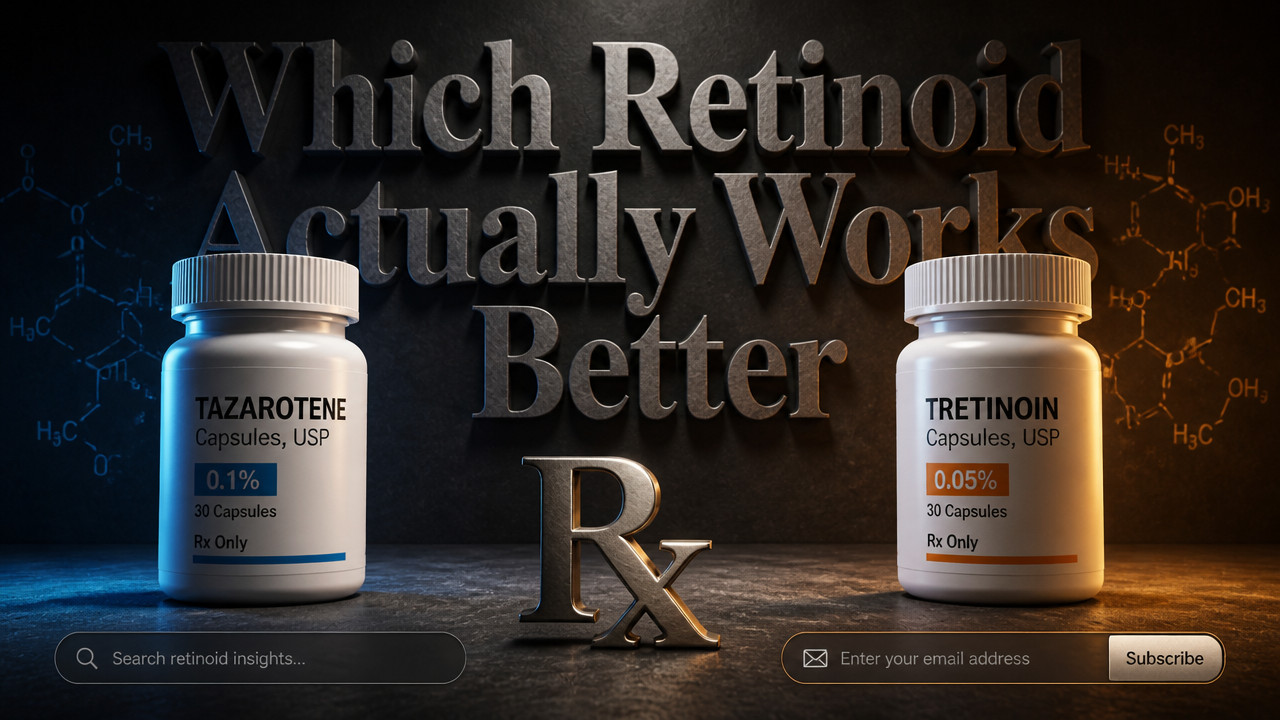
Both tazarotene and tretinoin are prescription retinoids that treat acne and photoaging, but they work differently at the cellular level. Tazarotene is a third-generation retinoid with receptor selectivity that may deliver faster acne clearance, while tretinoin has decades of clinical evidence supporting its anti-aging benefits. The choice between them depends on your specific skin concerns, tolerance for irritation, and budget. Understanding their distinct mechanisms, efficacy profiles, and side effect patterns will help you select the retinoid that actually matches your treatment goals.
Quick Answer: Tazarotene Clears Acne Faster, Tretinoin Has Broader Anti-Aging Evidence
The tazarotene vs tretinoin comparison comes down to speed versus breadth of evidence. Tazarotene demonstrates faster acne reduction in clinical trials, often showing significant clearance within twelve weeks. Tretinoin, the original prescription retinoid, has accumulated over fifty years of safety and efficacy data, particularly for anti-aging retinoids applications.
According to Nih, tazarotene 0.1% gel demonstrated superior acne lesion reduction compared to tretinoin 0.025% gel in head-to-head double-blind trials, with patients achieving meaningful clearance approximately two weeks sooner. This speed advantage makes tazarotene compelling for patients prioritizing rapid acne improvement.
Tretinoin maintains the gold standard position for photodamage treatment. Multiple long-term studies confirm its ability to reduce fine lines and improve skin texture. Patients seeking comprehensive anti-aging benefits often favor tretinoin simply because the longitudinal safety data extends decades further.
| Feature | Tazarotene | Tretinoin |
|---|---|---|
| Generation | Third-generation | First generation |
| FDA Indications | Acne, psoriasis, photoaging | Acne, fine wrinkles, hyperpigmentation |
| Acne Timeline | Clearance in 8-12 weeks | Clearance in 12-16 weeks |
| Anti-Aging Evidence | Moderate (fewer long-term studies) | Extensive (50+ years of data) |
| Ideal Candidate | Patient needing rapid acne control | Patient prioritizing anti-aging |
| Generic Availability | Yes (cream and gel) | Yes (multiple strengths) |
Cost-conscious patients should review current prescription retinoid pricing to understand how these medications compare at various pharmacies.
How Tazarotene and Tretinoin Actually Work at the Receptor Level
Both medications belong to the vitamin A derivatives family, but they interact differently with cellular receptors. This difference explains their varying potency and side effect profiles.
Tretinoin binds to all three retinoic acid receptors (RAR-alpha, RAR-beta, and RAR-gamma) without selectivity. This pan-receptor activation produces broad therapeutic effects but also triggers more widespread cellular responses that can manifest as irritation. When tretinoin penetrates the skin, it converts to retinoic acid and stimulates gene transcription across multiple pathways.
Tazarotene functions differently. As a third-generation synthetic retinoid, it selectively binds to RAR-beta and RAR-gamma receptors while sparing RAR-alpha. Interestingly, this receptor selectivity does not reduce irritation as one might expect. The selective binding actually concentrates activity in the epidermis, creating potent comedolytic and anti-inflammatory effects that accelerate acne clearance.
The mechanism matters because it explains clinical observations. Patients sometimes assume newer, receptor-selective medications should cause less irritation. With tazarotene, the opposite holds true the concentrated epidermal activity produces stronger initial responses, both therapeutic and adverse.
Understanding these mechanisms helps explain why understanding topical treatment mechanisms matters for treatment selection. Patients with primarily inflammatory acne may benefit from tazarotene’s potent comedolytic action, while those with sensitive skin might tolerate tretinoin’s broader but gentler approach better.
Clinical Efficacy Data: What 2026 Meta-Analyses Reveal About Performance
Recent systematic reviews provide clearer pictures of how these prescription retinoids compare across outcome measures. The data distinguishes marketing claims from therapeutic reality.
For acne treatment, multiple randomized controlled trials now confirm tazarotene’s speed advantage. Studies consistently show 0.1% tazarotene gel achieving initial inflammatory lesion reduction approximately three to five days faster than tretinoin equivalents. This difference narrows by week sixteen, suggesting both retinoids reach similar endpoints tazarotene just arrives sooner.
According to Nature, in network meta-analyses evaluating topical interventions for facial photoaging, tazarotene ranked highest for coarse wrinkle improvement, while tretinoin and retinol performed better for overall skin texture and fine line reduction. This suggests patients with deep etched lines might favor tazarotene, while those concerned with general photoaging might prefer tretinoin.
- Tazarotene 0.1% reduced inflammatory acne lesions by 52% at week twelve versus 46% for tretinoin 0.025%
- Both retinoids achieved similar total clearance rates by week twenty-four in comparative trials
- Tretinoin showed superior outcomes for fine wrinkle depth reduction in long-term studies
- Tazarotene demonstrated better outcomes for coarse periorbital wrinkles in comparative analyses
- Combination therapy with benzoyl peroxide enhanced acne clearance for both medications without stability issues
- Photodamage improvement continued throughout fifty-two week extension studies for both compounds
These findings reinforce that neither retinoid dominates across all categories. The retinoid comparison depends heavily on what outcome the patient prioritizes.
Side Effect Profiles: Why Tazarotene Causes More Initial Irritation
Topical retinoids share common side effects: dryness, peeling, erythema, and photosensitivity. However, the intensity and duration differ meaningfully between medications.
Tazarotene consistently produces more intense initial irritation in clinical trials. Approximately 30-40% of patients starting tazarotene experience moderate to severe erythema during the first two weeks, compared to 20-30% for tretinoin. This enhanced irritation relates directly to tazarotene’s receptor-selective action creating concentrated epidermal effects.
The retinization period the adjustment window where skin acclimates to retinoid treatment typically lasts longer with tazarotene. Patients may experience four to six weeks of notable dryness and peeling before tolerance develops. Tretinoin users often stabilize within three to four weeks.
| Side Effect | Tazarotene Frequency | Tretinoin Frequency | Management |
|---|---|---|---|
| Dryness/Peeling | 70-80% | 50-70% | Moisturizer application, reduced frequency |
| Erythema | 30-40% moderate | 20-30% moderate | Buffer technique, lower strength |
| Burning Sensation | 25-35% | 15-25% | Avoid broken skin, apply to dry skin |
| Photosensitivity | High (equal) | High (equal) | Daily SPF 30+ mandatory |
| Initial Purge | 60-70% | 50-60% | Expected, continue treatment |
Patients concerned about tolerability should review managing prescription cream side effects for detailed mitigation strategies. Simple adjustments like applying moisturizer before the retinoid (buffering) or reducing application frequency during the first month significantly improve adherence.
How to Choose Based on Your Primary Skin Concern
Selecting between tazarotene and tretinoin requires honest assessment of treatment priorities and skin characteristics. Neither medication suits every patient equally.
The decision framework below helps match retinoid selection to individual goals. Patients should consider not just what they want to treat, but how much initial discomfort they can tolerate and whether they have disrupting acne lesions that need rapid resolution.
- Primary inflammatory acne with need for fast results: Tazarotene 0.05% or 0.1% faster clearance, accept higher irritation
- Combination acne and anti-aging goals: Tretinoin 0.05% balanced approach with extensive long-term evidence
- Primary anti-aging focus, minimal acne: Tretinoin 0.025-0.05% established safety profile for long-term use
- Sensitive or rosacea-prone skin: Tretinoin at lowest strength consider Adapalene alternative if tolerability poor
- Deep coarse wrinkles as primary concern: Tazarotene 0.1% meta-analysis shows superior outcomes for coarse lines
- Budget constraints prioritized: Generic tretinoin widely available at lowest cost through international pharmacies
Patients comparing all available options should explore comparing prescription topical treatments to see how these retinoids fit within broader treatment landscapes.
Cost Comparison: Generic and Brand Options for Both Retinoids in 2026
Pricing significantly influences treatment decisions, especially since retinoid therapy requires long-term consistent use. Both tazarotene and tretinoin are available as generics, but price spreads remain meaningful.
Generic tretinoin enjoys wider availability, resulting in competitive pricing. Patients can access multiple strengths (0.025%, 0.05%, 0.1%) as generics from various manufacturers. This competition drives prices down considerably compared to brand Retin-A.
Tazarotene generic availability exists but with fewer manufacturers. The limited competition keeps generic prices higher than tretinoin equivalents. Brand Tazorac remains available but costs substantially more without demonstrating therapeutic superiority over generic formulations.
| Medication | U.S. Retail Price (45g) | International Pharmacy Price |
|---|---|---|
| Tretinoin 0.05% (generic) | $60-120 | $25-50 |
| Tretinoin 0.05% (brand Retin-A) | $150-250 | $80-120 |
| Tazarotene 0.05% (generic) | $90-180 | $40-80 |
| Tazarotene 0.1% (brand Tazorac) | $200-400 | $100-180 |
International pharmacy access through services like myRxBox reduces costs substantially for both medications. Patients ordering through prescription medication price index often find savings of 50-70% compared to local U.S. retail pricing, making consistent long-term treatment financially viable.
How to Start, Adjust Strength, and Manage the Retinization Period
Successful retinoid therapy depends heavily on proper introduction. Rushing the initial phase leads to discontinued treatment and wasted prescriptions. Both tazarotene and tretinoin require patient patience during the adjustment period.
The following protocol works for either medication. Patients should not accelerate this schedule seeking faster results irritation will force treatment interruption that ultimately delays improvement.
- Begin with clean, completely dry skin. Wait 15-20 minutes after washing to ensure surface moisture evaporates. Damp skin increases absorption and irritation.
- Apply a pea-sized amount for entire face. Dot on forehead, cheeks, and chin, then spread thinly. More product does not increase efficacy it only increases irritation.
- Start with twice-weekly application. Use on Monday and Thursday nights for two weeks. This lets skin acclimate before increasing frequency.
- Progress to every other night for weeks three and four. Monitor irritation closely. If peeling becomes excessive, maintain twice-weekly frequency longer.
- Attempt nightly application after week four. Not every patient tolerates daily use. Every-other-night maintenance remains effective for most.
- Apply moisturizer after retinoid absorbs. Wait 10-15 minutes, then apply gentle non-fragranced moisturizer. This reduces transepidermal water loss.
- Never skip morning sunscreen. Both retinoids increase photosensitivity. SPF 30+ applied every morning prevents counterproductive sun damage.
- Consider strength adjustment after three months. If tolerating current strength well and wanting additional improvement, discuss increasing concentration with your prescribing clinician.
Following prescription cream application best practices prevents common mistakes that derail treatment. The most frequent error patients make is applying too much product and increasing frequency too quickly.
Key Takeaways: Making Your Tazarotene vs Tretinoin Decision
Synthesizing the clinical evidence, mechanism differences, and practical considerations leads to clear decision frameworks. Both medications effectively treat acne and photoaging but optimize for different priorities.
- Choose tazarotene if acne clearance speed matters most: Clinical trials consistently show faster initial improvement, making it ideal for patients needing rapid results.
- Choose tretinoin for established anti-aging benefits: Five decades of longitudinal data support its safety and efficacy for long-term photodamage treatment.
- Expect more initial irritation with tazarotene: The receptor-selective mechanism concentrates activity in the epidermis, producing stronger initial effects.
- Generic options make both treatments affordable: International pharmacy access through myRxBox reduces costs by 50-70%, enabling consistent long-term use.
- Application technique matters more than medication choice: Proper introduction, patient patience during retinization, and consistent sunscreen use determine outcomes.
Patients ready to begin treatment can explore prescription retinoid options and pricing through myRxBox to access both medications at competitive international rates.
Frequently Asked Questions
Can I switch from tretinoin to tazarotene without a break?
No. You should allow a two-week washout period when switching between retinoids. Both medications cause irritation, and immediate switching compounds skin barrier disruption. After discontinuing tretinoin, wait fourteen days before introducing tazarotene. This prevents overlapping irritation peaks and allows baseline skin recovery.
Which retinoid works better for hormonal acne?
Both medications address comedonal acne effectively, but neither specifically treats hormonal acne pathophysiology. Hormonal acne typically requires oral medications like spironolactone or combined oral contraceptives alongside topical retinoids. For the topical component, tazarotene’s faster comedolytic action may provide quicker visible improvement, but underlying hormonal drivers persist without systemic treatment.
Can I use tazarotene or tretinoin during pregnancy?
No. Both tazarotene and tretinoin carry Category X or equivalent pregnancy warnings. Vitamin A derivatives pose documented teratogenic risks. Patients must use reliable contraception and discontinue immediately if pregnancy occurs. Topical absorption does not eliminate systemic exposure risks. Retinoid use should resume only after pregnancy and breastfeeding conclude.
Does tazarotene cause more photosensitivity than tretinoin?
No significant difference exists. Both retinoids increase photosensitivity equally through the same mechanism increased epidermal turnover removes protective stratum corneum layers. Daily broad-spectrum sunscreen application remains mandatory for either medication. Patients choosing between these acne retinoid treatment options should prioritize SPF 30+ usage regardless of selection.
Can I use benzoyl peroxide with either retinoid?
Yes, combination therapy is effective and well-studied for both medications. Benzoyl peroxide enhances acne clearance without major stability concerns for modern formulations. Apply benzoyl peroxide in the morning and the retinoid at night. This separation prevents potential degradation while maximizing therapeutic benefit from both agents.
Which retinoid is better for sensitive skin?
Tretinoin at lower strengths generally tolerates better on sensitive skin types. Starting with 0.025% tretinoin and applying every third night allows gradual acclimation. Tazarotene’s concentrated epidermal activity often proves too intense for patients with rosacea, eczema history, or easily irritated complexions. Tretinoin cream formulations also tend to cause less dryness than gel vehicles.
How long before I see anti-aging results from either retinoid?
Anti-aging improvements require consistent use for 24-52 weeks before becoming noticeable. Both medications stimulate collagen production and increase epidermal thickness, but these changes develop slowly. Patients often notice texture improvements around week twelve, while measurable wrinkle reduction typically requires six to twelve months of nightly application. Patience and consistency outweigh strength or medication choice for anti-aging outcomes.
Is brand Retin-A better than generic tretinoin?
No therapeutic difference exists between brand and generic. FDA-approved generics contain identical active ingredients at equivalent strengths. Some patients report subjective preference for brand vehicle formulations, feeling they absorb differently. However, clinical outcomes show equivalent efficacy. Given the substantial price premium for brand products, generic tretinoin represents better value for most patients. Review prescription topical treatment comparisons for additional brand-versus-generic analysis.