
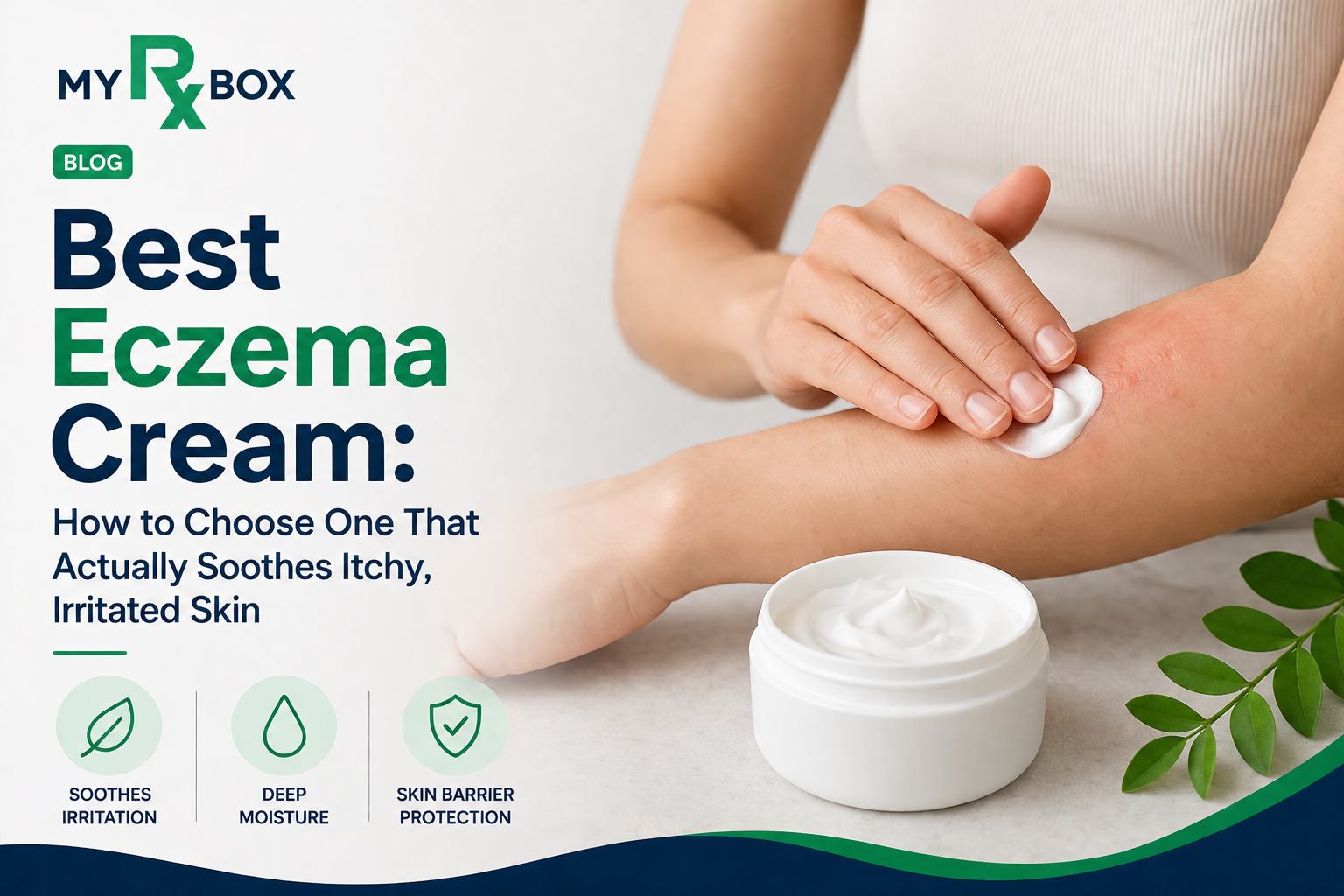
Anyone who’s dealt with eczema knows the cycle: dry, itchy skin, the urge to scratch, and then redness and irritation that only makes the itch worse. Reaching for a cream feels obvious — but with dozens of tubes all promising relief, the real challenge is choosing the right one.
The best eczema cream for occasional dry patches isn’t the same product you’d want for a raw, weeping flare or for delicate skin on the face. This guide explains how eczema creams work, which ingredients genuinely help, and how to match a product to your skin and your flare — so you end up with something that soothes rather than something that just sits unused.

First, what an eczema cream can (and can’t) do
Eczema — most commonly atopic dermatitis — is a chronic condition rooted in a damaged skin barrier and an overactive immune response. When the barrier can’t hold moisture in or keep irritants out, skin becomes dry, itchy, inflamed, and prone to flares. Because the tendency toward eczema is built into how your skin and immune system behave, no cream cures it.
What a good eczema cream does is manage the flare and support the skin between them: restoring moisture, repairing the barrier, calming inflammation, and easing the itch that drives the whole cycle. A cream that “works” is one that keeps your skin comfortable and flares less frequent — not one that makes eczema vanish for good.
The encouraging part is that mild-to-moderate eczema is often well-controlled with the right topical routine. More severe, widespread, or persistent eczema usually needs a clinician’s input, but for many people, a smart cream routine is the core of everyday management.
The key ingredients in the best eczema creams
Most effective eczema creams rely on a small set of ingredients. Learning what each does lets you read a label instead of trusting the front of the box.
Emollients and moisturizers are the foundation of eczema care — full stop. Ingredients like petrolatum, glycerin, shea butter, and mineral oil seal in water and soften skin. If you buy only one product, make it a rich, fragrance-free moisturizer, because consistent moisturizing is what keeps the barrier intact and flares at bay. The best moisturizer for eczema is usually a thick cream or ointment rather than a thin, quickly absorbed lotion.
Ceramides deserve a special mention. Ceramides are lipids naturally found in a healthy skin barrier, and people with eczema often have less of them. A ceramide cream for eczema helps rebuild that barrier so skin holds moisture better and reacts less to irritants — which is why ceramide-based creams have become a go-to recommendation.
Colloidal oatmeal is a gentle, well-tolerated anti-itch and skin-soothing ingredient. Colloidal oatmeal for eczema calms irritation and reduces the itch that fuels scratching, and it suits sensitive skin, making it a common choice for both adults and children.
Hydrocortisone is a mild topical steroid available over the counter (usually 1%). Hydrocortisone cream for eczema reduces redness, swelling, and itch during a flare and is reasonable for short-term use on small areas. Stronger steroids exist but require a prescription and supervision, because overuse — especially on thin skin like the face — can cause side effects.
Prescription-only actives complete the picture, and they’re worth understanding even if you can’t buy them off the shelf. Stronger topical corticosteroids, topical calcineurin inhibitors (often used on the face and folds), and newer non-steroidal anti-inflammatory creams can control eczema that OTC options can’t. These need a doctor’s or pharmacist’s guidance to use safely — so if over-the-counter creams aren’t working, that’s your signal to book an appointment rather than to hunt for something stronger on your own.
How to choose an eczema cream for your situation
The best OTC eczema treatment isn’t one product — it’s the one that fits your flare. Three factors should drive the decision: severity, location, and skin sensitivity.
Match the cream to how active the flare is
For everyday dryness and prevention, a rich ceramide or emollient moisturizer used consistently is the priority. For an active, itchy, inflamed flare, you may add a short course of mild hydrocortisone on the worst patches, alongside — not instead of — your moisturizer. The moisturizer does the long-term barrier work; the anti-inflammatory calms the flare.
Match the cream to where the eczema is
Location changes what’s safe and sensible:
- Body (arms, legs, trunk, hands): Thicker skin here tolerates greasier, richer formulas, and hand eczema in particular benefits from frequent, heavy moisturizing.
- Face and eyelids: This skin is thin and delicate, so strong steroids and harsh ingredients can do harm. For an eczema cream for the face, gentler, fragrance-free options are safer, and this is an area where professional guidance really pays off before applying anything potent.
- Skin folds: Warm, moist creases need gentle formulas; strong actives can be too harsh here.
Match the cream to your skin’s sensitivity
Because eczema-prone skin reacts easily, prioritize fragrance-free, dye-free formulas, and patch-test new products on a small area first. Fewer, gentler ingredients usually beat a long list of actives. Fragrance is one of the most common triggers, so a fragrance-free eczema cream is a safe default.
Eczema cream vs. psoriasis cream: are they the same?
A common question — and the answer is not really. Both conditions are inflammatory, so there’s overlap: moisturizers and mild hydrocortisone help both. But the specialized ingredients differ. Eczema creams focus on barrier repair and calming (ceramides, colloidal oatmeal, rich emollients), while psoriasis creams focus on slowing rapid skin-cell turnover and lifting thick scale (coal tar, salicylic acid, vitamin D analogues).
Using a psoriasis cream on eczema can be too harsh and may irritate already-sensitive skin. If you’re unsure which condition you actually have, that uncertainty is a good reason to get a diagnosis before buying the wrong category of product.
Building a simple routine that actually soothes skin
The most common mistake is treating eczema only when it flares, then stopping the moment skin looks calmer. Eczema rewards consistency far more than intensity. A realistic routine looks like this:
- Moisturize daily and generously — at least twice a day, and always right after bathing while skin is still damp, to lock in water.
- Bathe gently — lukewarm (not hot) water, a mild non-soap cleanser, and pat dry rather than rub.
- Treat active flares with a short course of mild hydrocortisone or a soothing anti-itch cream on the worst spots, as directed.
- Keep moisturizing even when clear — the daily barrier care is what prevents the next flare.
Small habits help too: managing known triggers like harsh soaps, wool, sweat, dust, and stress; keeping nails short to limit scratch damage; and using a humidifier in dry indoor air.
When to stop self-treating and see a professional
Over-the-counter creams are a sensible first step for mild, limited eczema. But some situations call for a clinician rather than another trip to the pharmacy aisle:
- Eczema covers a large area or keeps spreading
- It affects your face, eyelids, or skin folds and isn’t settling with gentle care
- Skin looks infected — oozing, crusting, increasing pain, warmth, or yellow crusting
- OTC treatments aren’t helping after a couple of weeks of consistent use
- Flares are frequent or severe enough to disrupt your sleep, work, or wellbeing
A doctor or pharmacist can confirm the diagnosis, prescribe stronger or non-steroidal treatments safely, identify triggers, and check for infection. Escalating to stronger steroids on your own — especially on the face — can cause side effects and mask a problem that needs a different approach.
The bottom line on choosing the best eczema cream
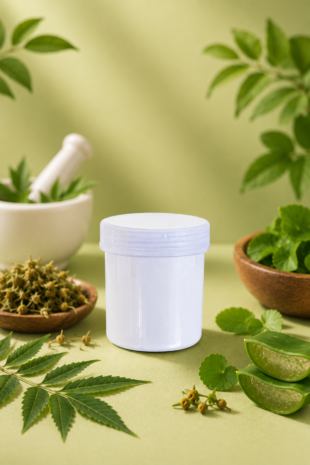
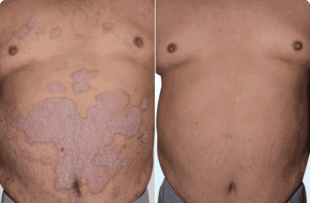
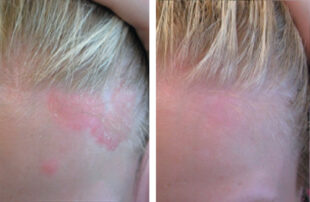
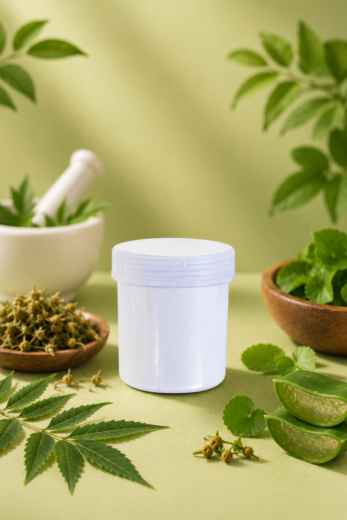
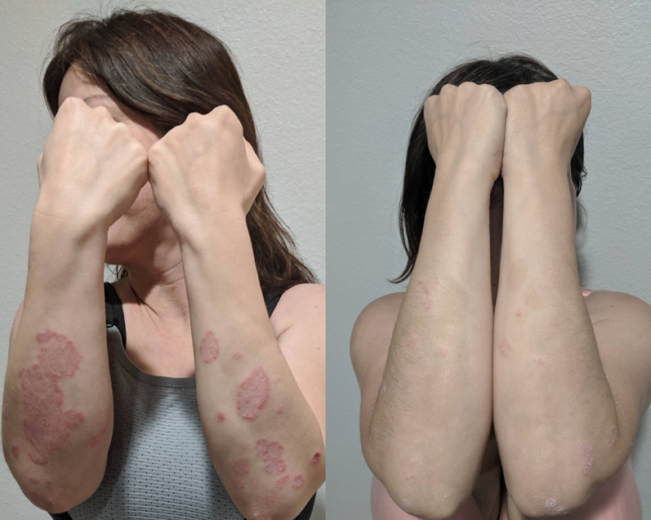


Eczema Cream
- Type: Ayurvedic Cream
- Indications: Skin Care Cream
- Manufactured In: India
- Delivery Location: Worldwide (subject to courier availability)
- Estimated Delivery Time: 6–10 Business Days
There’s no single “best eczema cream” for everyone — there’s the best one for your skin and your flare. For most people, the winning approach is a rich, fragrance-free ceramide or emollient moisturizer as the daily foundation, colloidal oatmeal for soothing itch, and a short course of mild hydrocortisone for active, inflamed patches. Match the product to the flare’s severity, its location, and your skin’s sensitivity, stay consistent between flares, and know when to bring in a professional.
Do that, and you’re not just buying a tube and hoping. You’re choosing a cream with a real chance of doing what you actually want: calming the itch and keeping your skin comfortable.
Frequently asked questions
What is the best over-the-counter eczema cream? There’s no single winner. The most effective OTC options pair a rich, fragrance-free moisturizer — ideally with ceramides — with soothing ingredients like colloidal oatmeal, plus short-term mild hydrocortisone for active flares. The right pick depends on how inflamed your skin is and where the eczema is located.
How long does an eczema cream take to work? Moisturizers ease dryness quickly, and mild hydrocortisone can calm an itchy flare within a few days. If you’ve used a product consistently for a couple of weeks without improvement, speak to a doctor or pharmacist.
Can I use a regular moisturizer for eczema? Yes — daily moisturizing is the single most important part of managing eczema. Choose thick, fragrance-free creams or ointments over thin lotions, and apply generously, especially after bathing.
Is hydrocortisone safe to use on eczema? Mild 1% hydrocortisone is fine for short-term use on small areas during a flare, but it’s not meant for long-term daily use — particularly on the face. If you find yourself needing it constantly, that’s a reason to see a clinician.
When should I see a doctor about eczema? See a clinician if eczema is widespread, affects your face or eyelids, shows signs of infection, or doesn’t improve with over-the-counter creams. Stronger prescription treatments should always be used under medical supervision.