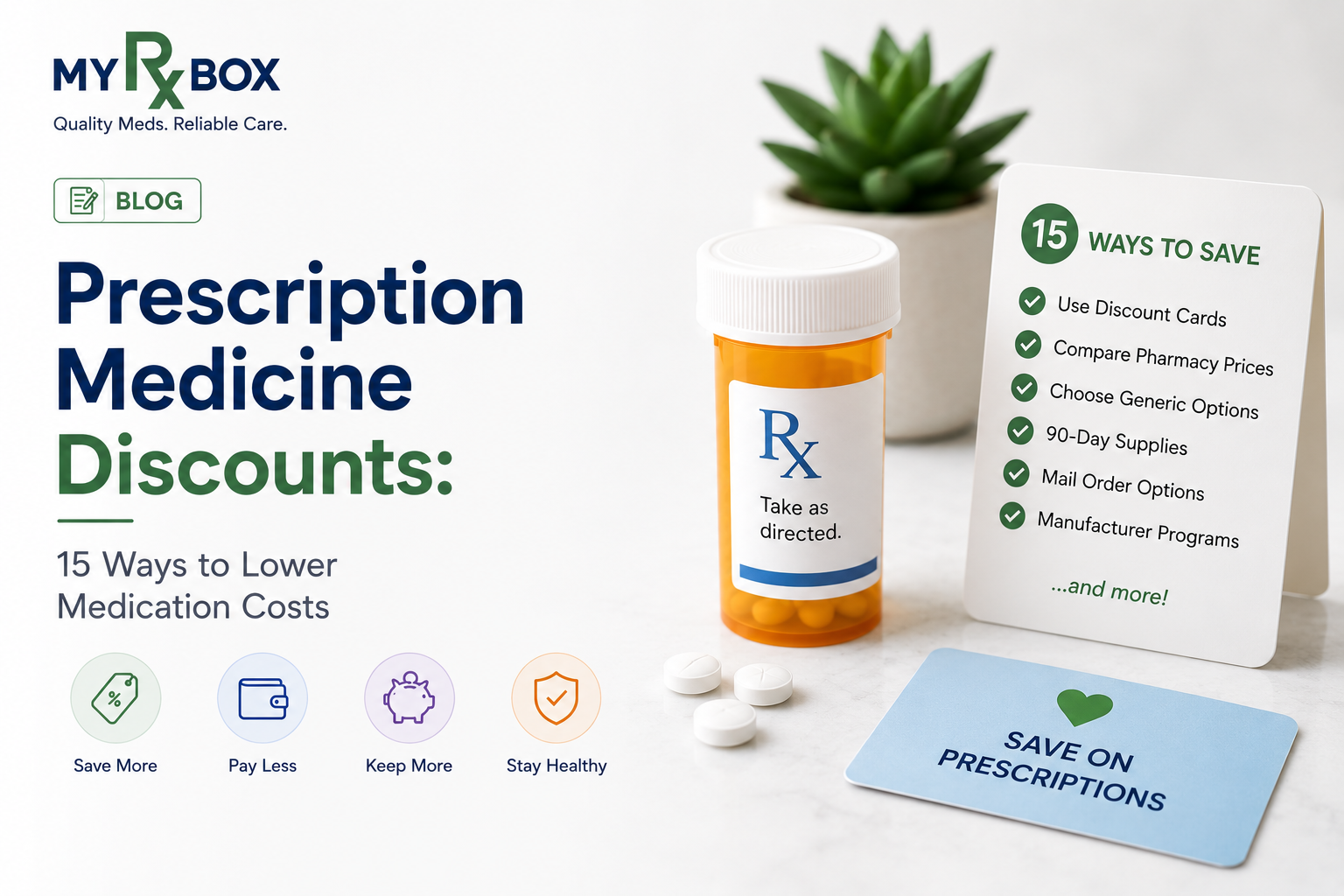
Prescription medicines can become a major recurring expense, particularly when treatment continues for months or years. Fortunately, there are legitimate ways to investigate lower prices without changing your prescribed treatment on your own.
1. Ask About an Approved Generic
One of the first questions to ask is whether your prescribed medicine has an approved generic equivalent. Generic competition can reduce prices while approved products must still meet regulatory requirements.
Read Brand vs Generic Medicines to understand what is the same and what can differ.
2. Compare Pharmacy Prices
Do not assume every pharmacy charges the same amount. Compare several legitimate pharmacies using the exact active ingredient, strength, quantity and dosage form.
Use the Medicine Price Index as a research starting point.
3. Calculate the Price Per Tablet or Unit
A larger package may have a higher total price but a lower per-unit cost. Use total price ÷ quantity = price per unit.
4. Compare Cash and Insurance Pricing
Depending on your insurance plan, deductible and pharmacy network, your covered price may differ from a pharmacy’s cash price. Understand your particular plan rules before deciding how to pay.
5. Check Your Insurance Formulary
A formulary lists medicines covered under a particular insurance plan. If your medicine is expensive under your plan, ask your prescriber whether a clinically appropriate covered alternative exists. Do not substitute medicines yourself.
6. Ask Whether a Longer Supply Is Appropriate
For some long-term medicines, a 60- or 90-day supply may be priced differently from a 30-day supply. A longer supply is not appropriate for every medicine or patient, so confirm with the prescriber and pharmacist.
7. Investigate Manufacturer Assistance
Some manufacturers operate patient-assistance or copay programs for eligible patients. Eligibility varies. Prefer official manufacturer information rather than unknown websites claiming guaranteed access.
8. Evaluate Prescription Discount Programs Carefully
Discount programs may provide savings in some situations, but a medical discount program is not automatically health insurance. Read the terms and understand how the program works.
See our GoodRx Alternative Guide for comparison ideas.
9. Check Licensed Mail-Order Options
For some maintenance medicines, legitimate mail-order pharmacies may offer convenient supply arrangements. Compare total cost, shipping, quantity, refill timing, pharmacist access and licensing.
10. Review Your Medicines With a Healthcare Professional
People taking several medicines may accumulate old, duplicated or changed prescriptions. A medication review can help clarify what is still current. Never discontinue a prescribed medicine simply to save money without discussing the change with the prescriber.
11. Avoid Paying for a Brand Accidentally
Ask your pharmacist whether your medicine has an approved generic equivalent and whether substitution is permitted and appropriate.
Look up ingredients in the Medicine Glossary.
12. Compare Total Cost, Not Headline Price
Include the medicine price, dispensing fees, delivery, membership charges and consultation charges where applicable.
13. Plan Refills Before You Run Out
Emergency purchases reduce your ability to compare alternatives. Keeping track of refill dates gives you more time to resolve insurance, stock or delivery problems.
14. Do Not Trade Safety for a Discount
A website offering prescription-only medicine without following the prescription rules that apply in your jurisdiction should be treated cautiously. Read How to Check If an Online Pharmacy Is Legit.
15. Ask for Help When Medication Is Unaffordable
Tell your prescriber or pharmacist when cost is creating a problem. They may know about approved generics, formulary alternatives, assistance programs or other clinically appropriate options.
Prescription Savings Checklist
- Check the generic name.
- Compare several legitimate pharmacies.
- Calculate price per unit.
- Check cash versus insurance.
- Review your formulary.
- Investigate legitimate assistance.
- Include shipping and fees.
- Verify pharmacy credentials.
- Never change treatment solely to save money without clinical guidance.
Frequently Asked Questions
How can I get prescription medicine cheaper?
Start by asking about approved generic alternatives, comparing legitimate pharmacy prices, reviewing insurance coverage and checking legitimate assistance or discount programs.
Are medicine discount cards insurance?
Not necessarily. Read the program’s terms and do not assume a discount program provides the same protections as health insurance.
Can generic medicine save money?
Often, yes. The actual amount varies by medicine and pharmacy.
Should I stop an expensive medicine?
Do not discontinue or alter prescription treatment without discussing it with the prescribing healthcare professional.
Medical disclaimer: Educational information only. Treatment and prescription decisions should be made with an appropriately qualified healthcare professional.