
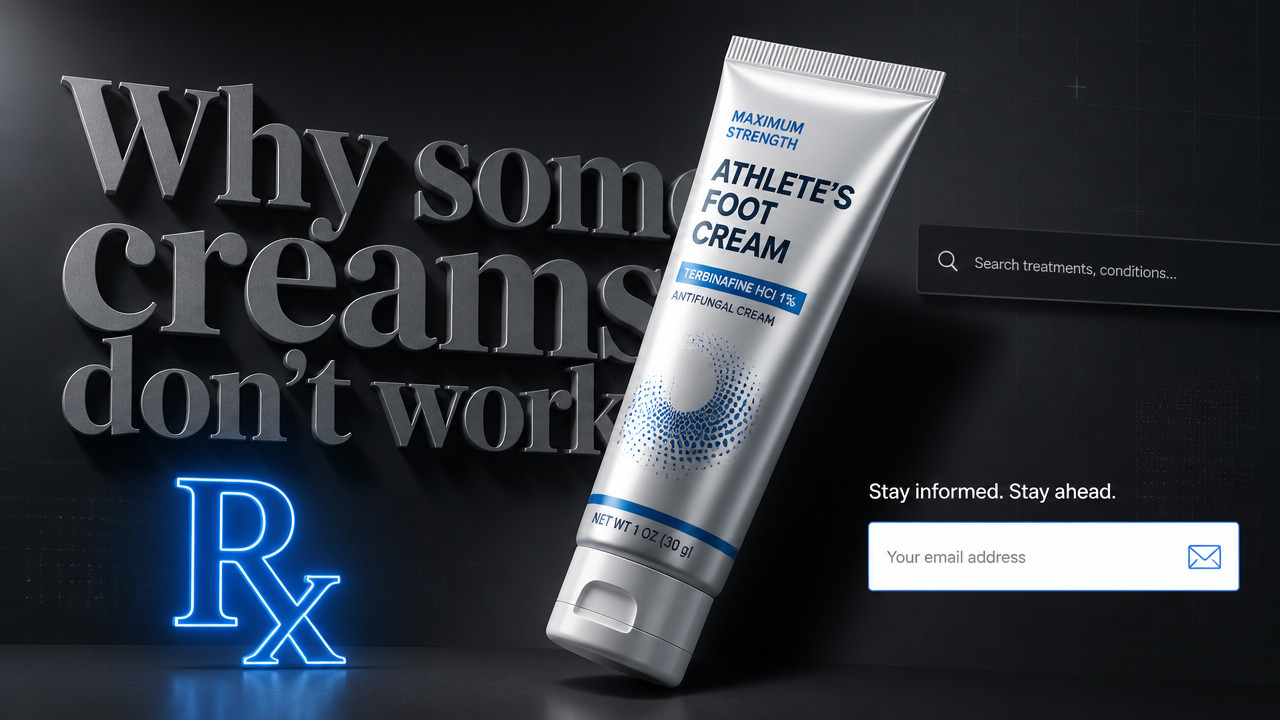
Athlete’s foot technically tinea pedis affects 15–25% of people at any given time, making it one of the most common fungal infections worldwide. The itching, burning, and cracked skin between your toes isn’t just uncomfortable; it’s a persistent fungal colony that won’t vanish on its own. Over-the-counter athlete’s foot cream works by delivering antifungal agents directly to infected skin, stopping fungal reproduction and clearing the infection within two to four weeks when used correctly. This guide explains which active ingredients genuinely cure athlete’s foot, how creams differ in speed and efficacy, and what to look for when choosing a product that eliminates the fungus rather than just masking symptoms.
Quick Answer: Which OTC Athlete’s Foot Cream Clears Infections Fastest
When you’re standing in the pharmacy aisle staring at a wall of tubes, the choice comes down to active ingredients not brand names. Three compounds dominate the over-the-counter market: terbinafine hydrochloride, clotrimazole, and miconazole nitrate. They are not created equal.
Terbinafine (typically 1% concentration) consistently outperforms azole antifungals in both cure speed and relapse prevention. Clinical data from 2026 confirms that terbinafine achieves mycological cure meaning the fungus is eliminated, not just suppressed in significantly shorter timeframes than clotrimazole or miconazole. The difference isn’t marginal. Terbinafine often clears infections in one week of treatment followed by a maintenance period, while azole compounds require four weeks of consistent application for similar results. According to Michiganfootdoctors, athlete’s foot prevalence statistics underscore how common reinfection is when treatment isn’t completed properly making the faster-acting fungicidal agent the better investment for most patients.
| Active Ingredient | Cure Rate (4 weeks) | Treatment Duration | Estimated Cost (Generic) |
|---|---|---|---|
| Terbinafine 1% | 90–95% | 1–2 weeks | $8–$15 |
| Clotrimazole 1% | 70–80% | 4 weeks minimum | $6–$12 |
| Miconazole 2% | 70–75% | 4 weeks minimum | $7–$14 |
For most people with uncomplicated interdigital athlete’s foot that’s the classic itchy, peeling skin between toes terbinafine cream is the logical first choice. It works faster, requires fewer applications, and has lower rates of treatment failure due to patient dropout. The one-week active treatment window makes adherence realistic.
Why Terbinafine Hydrochloride 1% Outperforms Azole Antifungals
The reason terbinafine beats azole compounds isn’t marketing hype it’s pharmacology. Terbinafine is an allylamine, a class of antifungals that works by inhibiting squalene epoxidase, an enzyme the fungus needs to build its cell membrane. Without this enzyme, toxic squalene accumulates inside the fungal cells and they die. This is fungicidal action: the drug actually kills the organism.
Azoles like clotrimazole and miconazole work differently. They inhibit a different enzyme ( lanosterol 14α-demethylase) which disrupts ergosterol synthesis. But the result is fungistatic: they stop the fungus from growing and reproducing, but rely on your immune system to clear the remaining organisms. That’s why azole treatments take longer and why relapse is more common if you stop early.
Dermatology research has consistently shown this mechanism difference matters in real-world outcomes. A study published in skin infection literature found that terbinafine’s fungicidal activity translates to clinical cure rates 15–20% higher than clotrimazole when both are used as directed.
- Faster symptom relief: Terbinafine begins reducing itching and burning within 2–3 days, while azoles typically take 5–7 days for noticeable improvement.
- Shorter treatment course: One week of twice-daily terbinafine often suffices, versus four weeks for clotrimazole or miconazole.
- Lower relapse rates: Fungicidal action means fewer residual spores to re-establish infection after treatment stops.
- Better for moccasin-type: The chronic, scaling infection covering the sole responds more reliably to terbinafine’s deeper penetration.
Of course, mechanism only matters if the diagnosis is correct. Not every itchy, scaly foot is athlete’s foot and treating the wrong condition with antifungals delays proper care. For eczema versus psoriasis treatment differences, the approach is entirely different, which is why accurate identification matters before buying any OTC product.
How to Identify True Tinea Pedis Versus Eczema or Contact Dermatitis
Before you apply any over-the-counter athlete’s foot cream, confirm you’re actually dealing with a fungal infection. Misdiagnosis is common and it leads to wasted money, prolonged symptoms, and unnecessary skin irritation from antifungal products applied to non-fungal conditions.
True athlete’s foot (tinea pedis) has distinctive patterns. The infection thrives in warm, moist environments between toes, causing maceration that soft, white, peeling skin that looks almost waterlogged. Itching is intense, often worse at night. The borders of the affected area are typically raised, red, and scaly, with central clearing that creates a ring-like appearance (hence “ringworm,” another tinea infection).
| Feature | Athlete’s Foot | Eczema | Contact Dermatitis |
|---|---|---|---|
| Location | Between toes, soles | Ankles, backs of knees, hands | Where allergen touched skin |
| Appearance | Maceration, scaling border | Dry, red patches, no border | Red, blistered, weeping |
| Itch pattern | Intense, worse at night | Chronic, comes and goes | Appears after exposure |
| Bilateral? | Often starts one foot | Usually symmetric | Depends on exposure |
Eczema (atopic or dyshidrotic) presents differently. The patches are typically dry, red, and scaly without the raised border. Eczema rarely has the moist maceration between toes. It’s often bilateral and symmetric, appearing on both feet simultaneously versus athlete’s foot, which frequently starts on one foot and spreads. If you notice small, deep blisters on the sides of your toes or soles, that’s more likely dyshidrotic eczema than fungus. For choosing the right eczema cream, antifungals won’t help you need barrier repair and anti-inflammatory ingredients instead.
Contact dermatitis creates an allergic reaction pattern. Did you switch laundry detergent, sock material, or shoe inserts recently? The rash appears where the allergen touched your skin. It’s often red, swollen, and may blister. Unlike fungal infections, contact dermatitis doesn’t spread in a ring pattern or cause the characteristic interdigital maceration.
According to Nih, the 15–25% prevalence figure for athlete’s foot actually underrepresents the problem because many self-diagnosed cases are eczema or psoriasis misattributed to fungal infection. That’s why persistent cases deserve professional evaluation. If an OTC antifungal hasn’t improved symptoms after two weeks, the diagnosis may be wrong.
The Four-Week Application Protocol That Actually Cures Athlete’s Foot
Buying the right cream is only half the battle. Application technique and treatment duration determine whether you permanently eliminate the fungus or temporarily suppress it, only to have it return weeks later. Most treatment failures come from stopping too early, not from choosing the wrong active ingredient.
The protocol below works for any OTC antifungal, though terbinafine users can compress the active treatment phase to 7–14 days. The maintenance phase matters regardless of which product you choose.
- Clean and dry thoroughly: Wash feet with soap, then dry completely especially between toes. Fungi thrive in moisture. Pat dry rather than rubbing, which can irritate already-inflamed skin.
- Apply a thin layer to affected areas: Use enough cream to cover the visible rash plus a 1-inch border. Don’t glob it on a thin layer absorbs better.
- Extend application to surrounding skin: Fungal spores exist beyond the visible rash. Treat the “halo” area to prevent the infection from spreading outward.
- Apply twice daily, 12 hours apart: Morning and evening works best. Consistency matters more than timing precision.
- Continue for one week after symptoms clear: This is where most people fail. The visible rash消失 before the fungus is eliminated. Keep applying to prevent relapse.
- Rotate shoes and change socks daily: Fungi survive in dark, moist shoes. Air out footwear between wears and use antifungal powder in shoes if you sweat heavily.
Even with perfect technique, reinfection is possible if you don’t address your environment. The fungus lives in your socks, shoes, bathroom floor, and towels. Wash socks in hot water (60°C/140°F minimum), change towels every 2–3 days, and consider antifungal spray for shoes. Prevention is easier than repeated treatment.
For those who want verified, quality antifungals without pharmacy markup, affordable healthcare products from myRxBox provide a straightforward ordering process with competitive pricing.
Cream Versus Spray Versus Powder: Which Formulation Penetrates Infected Skin
The pharmacy aisle offers more than just creams. Antifungals come as creams, sprays, powders, and solutions and the formulation genuinely matters depending on your infection type and lifestyle.
Creams remain the gold standard for most athlete’s foot presentations. The vehicle the base that carries the active ingredient helps the drug penetrate the stratum corneum, where the fungus resides. Creams work best for interdigital infections (between toes) because they stay in place and moisturize the macerated skin while delivering medication. For chronic, hyperkeratotic moccasin-type infections covering the sole, creams help soften the thick, scaly skin so antifungal agents can penetrate.
Sprays offer convenience. They’re ideal for people who dislike touching their feet or for prophylactic use after gym visits, swimming, or other high-risk exposures. However, sprays may not deliver consistent dosing to infected areas, and the alcohol base can sting cracked or fissured skin. Use sprays for prevention or very mild infections rely on creams for active treatment.
Powders don’t penetrate skin well enough to treat established infections. Their role is moisture control and prevention. If your feet sweat heavily or you’re prone to recurrence, antifungal powder in shoes and socks creates an environment hostile to fungal growth. They’re adjuncts, not primary treatments.
Solutions (liquid drops) work well for interdigital infections, particularly if the web spaces are very macerated. They dry quickly and don’t add moisture to an already soggy environment.
For chronic conditions requiring consistent vehicle delivery for efficacy, best formulations for chronic skin conditions provide guidance beyond just the active ingredient because the vehicle often determines whether the active ingredient actually reaches its target.
When Generic Clotrimazole 1% Is Sufficient and When It Fails
Terbinafine’s superiority doesn’t mean clotrimazole is pointless. The azole antifungals have legitimate uses and at $6–$12 for a generic tube, they’re the most cost-effective option for the right patient profile.
- First-time, uncomplicated interdigital infection: If you’ve never had athlete’s foot before and the infection is mild just peeling between the fourth and fifth toes with minimal itching clotrimazole works fine provided you use it for the full four weeks.
- Treatment continuation after terbinafine: Some clinicians recommend switching to an azole after initial terbinafine clearance to prevent resistance, though evidence for this protocol remains debated.
- Budget-constrained patients committed to four-week treatment: Clotrimazole works if you follow the protocol. It just takes longer and requires more discipline.
- Mixed bacterial-fungal infections: Azoles have mild antibacterial activity that may help when secondary bacterial infection complicates tinea pedis.
- Pregnant patients: While both azoles and allylamines have safety considerations, some providers prefer clotrimazole’s longer safety track record during pregnancy consult your physician.
Clotrimazole fails when patients expect terbinafine speed. Using an azole for one week won’t clear anything you’ll suppress symptoms temporarily and the fungus rebounds stronger. Resistance to azoles is documented, particularly in institutional settings like nursing homes where antifungals are used frequently. If clotrimazole hasn’t worked after three weeks of twice-daily use, switch to terbinafine or seek professional evaluation.
To compare costs across antifungal options, compare medication pricing provides a clear view of generic versus brand-name pricing.
Prescription-Strength Alternatives When OTC Creams Don’t Clear the Infection
Most athlete’s foot responds to OTC antifungals. But not all of it does and knowing when to escalate prevents months of frustration and spreading infection.
Prescription topical antifungals include higher-concentration formulations and different vehicles. Prescription-strength terbinafine (available in different bases), ketoconazole cream, and ciclopirox gel offer more potent delivery than their OTC counterparts. If an OTC antifungal hasn’t produced meaningful improvement after two weeks, prescription options are the logical next step.
Oral antifungals become necessary for certain infection types. Moccasin athlete’s foot that thick, scaling coverage of the sole often requires systemic treatment because topical creams can’t penetrate the hyperkeratotic skin adequately. A two-week course of oral terbinafine or a one-month pulse of itraconazole resolves cases that resist every cream on the shelf. These prescriptions require liver function monitoring due to rare hepatotoxicity.
When to seek prescription treatment:
- No improvement after two weeks of OTC use (suggests wrong diagnosis or resistant organism)
- Moccasin-type infection covering the sole (topicals often insufficient)
- Diabetes or peripheral vascular disease (higher complication risk)
- Spreading infection despite treatment (treatment failure)
- Recurrent infections (more than two per year) (may need prophylactic protocol)
For those without easy dermatologist access, how to buy prescription medication online safely explains the legitimate telehealth and online pharmacy pathways particularly relevant for ongoing antifungal maintenance prescriptions.
Key Takeaways
- Terbinafine 1% outperforms clotrimazole and miconazole in cure rate and speed because it’s fungicidal (kills fungus) rather than fungistatic (stops growth).
- Continue treatment for one week after symptoms clear the visible rash resolves before the fungus is fully eliminated.
- Misdiagnosis is common; differentiate athlete’s foot from eczema and contact dermatitis before applying antifungals.
- Creams are superior to sprays for active treatment; use sprays for prevention and powders for moisture control.
- Persistent infections require prescription-strength or oral antifungals; seek professional evaluation if OTC treatment fails after two weeks.
For trusted antifungal products with verified quality and competitive pricing, order trusted antifungal creams through myRxBox’s secure platform.
Frequently Asked Questions
Can I use athlete’s foot cream on other parts of my body?
Yes, but with caution. The same antifungal ingredients treat tinea infections elsewhere tinea corporis (body), tinea cruris (jock itch), and tinea manus (hands). However, skin thickness varies by location. The delicate groin area may absorb medication differently than calloused feet, increasing systemic exposure. Facial use requires particular care; some antifungal vehicles irritate sensitive facial skin. If a suspected fungal rash doesn’t improve on any body location after two weeks of OTC treatment, discontinue use and seek evaluation rather than continuing indefinitely.
How long does it take for athlete’s foot cream to work?
Symptom relief begins in 2–3 days with terbinafine, 5–7 days with azoles. However, complete mycological cure the point where no fungus remains takes longer. Terbinafine achieves cure in 7–14 days of active treatment; azoles require four weeks minimum. The mistake most people make is stopping when symptoms improve rather than when the infection is cleared. That “one week after symptoms clear” rule exists because fungal spores persist beyond visible rash resolution.
Is it safe to use athlete’s foot cream during pregnancy?
Generally yes, but consult your obstetrician first. Topical antifungals have minimal systemic absorption, and most are considered low risk during pregnancy. Clotrimazole has the longest safety track record in pregnancy and is often the first-line recommendation. Terbinafine safety data is more limited, though no adverse outcomes have been conclusively linked to topical use. Oral antifungals require more careful risk-benefit analysis during pregnancy and are typically avoided unless the infection is severe and unresponsive to topicals.
Why does my athlete’s foot keep coming back?
Three reasons: incomplete treatment, environmental reinfection, or misdiagnosis. Incomplete treatment is the most common stopping when symptoms improve rather than completing the full course. Environmental reinfection happens when you treat your feet but not your shoes, socks, towels, and bathroom floors. Fungal spores survive for months in these reservoirs. The third possibility is that it’s not actually athlete’s foot. Eczema, psoriasis, and contact dermatitis can mimic fungal infections and won’t respond to any amount of antifungal cream.
Can I use expired athlete’s foot cream?
No efficacy cannot be guaranteed. Antifungal creams contain active ingredients that degrade over time, and preservative systems weaken. Using expired cream may deliver sub-therapeutic drug concentrations, which fails to clear the infection and potentially contributes to antifungal resistance. Additionally, contaminated products can introduce bacteria to already compromised skin. The expiration date exists for a reason; replace expired tubes rather than risking treatment failure for a $10 product.
Article created with love by hoox