Eczema vs psoriasis: what is the main difference?
Eczema vs psoriasis can be difficult to tell apart because both conditions may cause dry, itchy, inflamed and scaly skin. However, they are different skin conditions, and their typical appearance, location, triggers and treatment options can vary.
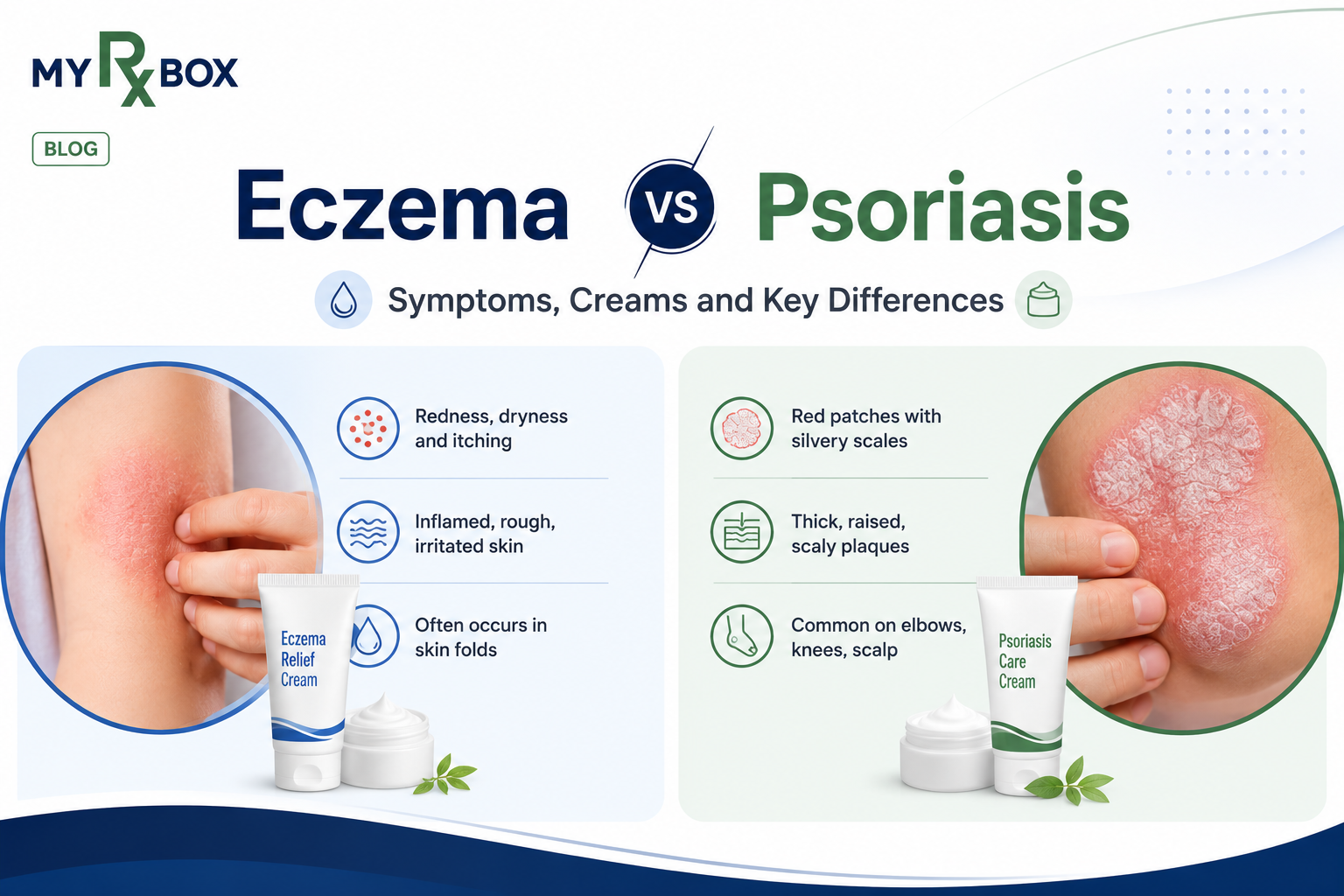
Eczema, particularly atopic dermatitis, often causes intense itching, dryness and irritated skin. Psoriasis more commonly causes well-defined, raised and scaly plaques. In addition, psoriasis can sometimes affect the nails and joints.
Although these differences can provide useful clues, appearance alone cannot always confirm a diagnosis. Therefore, persistent, severe or unusual skin symptoms should be assessed by a qualified healthcare professional.
If you are researching treatments for dry, itchy or scaly skin, understanding the difference between the two conditions is an important first step before choosing an eczema treatment cream or psoriasis cream.
Eczema vs psoriasis symptoms at a glance
Here is a simple comparison:
| Feature | Eczema | Psoriasis |
|---|---|---|
| Itching | Often intense | Can itch or burn |
| Skin texture | Dry, irritated, cracked or sometimes weeping | Thick, raised and scaly plaques |
| Typical scale | Usually dry or flaky | Often thicker scale |
| Common areas | Skin folds, hands, face and other areas | Scalp, elbows, knees and lower back are common |
| Nails | Less characteristic | Pitting, thickening or other nail changes may occur |
| Joints | Not typical of eczema | Psoriatic arthritis can affect joints |
| Contagious? | No | No |
These are general patterns rather than diagnostic rules. Both conditions can look different depending on age, skin tone, severity and the area affected.
What does eczema look like?
Eczema is a broad term covering several inflammatory skin conditions. Atopic dermatitis is one of the most common forms.
The National Institute of Arthritis and Musculoskeletal and Skin Diseases describes atopic dermatitis as a chronic condition that can cause inflammation, redness, irritation and severe itching. Skin may also become dry, cracked, thickened or scaly. Scratching can cause further damage and may lead to oozing, crusting or bleeding.
Common eczema symptoms include:
- intense itching;
- dry or sensitive skin;
- inflamed patches;
- rough or scaly areas;
- cracked skin;
- skin thickening after repeated scratching;
- oozing or crusting during some flares; and
- changes in skin colour after inflammation.
Eczema may look red on lighter skin tones. On darker skin, affected areas may appear brown, purple, grey or darker than surrounding skin.
Because itching can be particularly strong, people sometimes describe eczema as an “itch-scratch cycle.” Scratching damages the skin barrier further, which can make irritation worse.
What does psoriasis look like?
Psoriasis is also a chronic inflammatory condition. However, it involves an overactive immune response that causes skin cells to build up too quickly.
Plaque psoriasis, the most common type, typically produces thick, raised patches of skin covered with scale. These plaques often appear on areas such as the scalp, elbows, knees and lower back.
Common psoriasis symptoms may include:
- thick, raised plaques;
- dry or scaly skin;
- itching or burning;
- cracked skin that may bleed;
- scalp scaling;
- nail pitting;
- thickened or ridged nails; and
- joint pain or stiffness in people who develop psoriatic arthritis.
Psoriasis can range from a few small patches to widespread disease. Furthermore, symptoms often occur in cycles, with periods of flaring followed by periods of improvement.
Where does eczema commonly appear?
The location of eczema varies according to age and individual circumstances.
In children, atopic dermatitis commonly affects areas around the bends of the elbows and knees. The neck and ankles can also be involved. Adults may develop eczema on the hands, face and other areas as well.
Common eczema locations include:
- inside the elbows;
- behind the knees;
- hands;
- face;
- neck;
- ankles; and
- other areas of dry or irritated skin.
However, eczema can occur almost anywhere on the body.
Where does psoriasis commonly appear?
Psoriasis frequently develops on extensor surfaces, which means areas such as the outside of the elbows and knees.
Common locations include:
- elbows;
- knees;
- scalp;
- lower back;
- trunk;
- palms; and
- soles of the feet.
Psoriasis can also affect the nails and, in some people, the joints.
Therefore, location can offer a useful clue when comparing eczema vs psoriasis, although it should never be used as the only method of diagnosis.
Which is itchier: eczema or psoriasis?
Both conditions can itch.
However, eczema is particularly associated with severe itching. NIAMS lists itching as the most common symptom of atopic dermatitis, and scratching can worsen inflammation and damage the skin.
Psoriasis can also itch, burn or feel uncomfortable. Nevertheless, thick and clearly defined scaly plaques may be more noticeable than itching in some people.
The intensity of itching varies from person to person. Therefore, itch severity alone cannot reliably identify the condition.
Eczema vs psoriasis: key differences in appearance
One of the easiest ways to understand the difference between eczema and psoriasis is to compare their typical skin changes.
Eczema often appears:
- very itchy;
- dry;
- inflamed;
- cracked;
- rough;
- occasionally weeping or crusted.
Psoriasis often appears:
- thicker;
- more clearly defined;
- raised;
- scaly;
- plaque-like;
- commonly on the elbows, knees or scalp.
However, there can be considerable overlap.
Consequently, a dermatologist may need to examine the skin, review the medical history and occasionally perform additional tests when the diagnosis is uncertain. NIAMS notes that examination and medical history play important roles in diagnosing both atopic dermatitis and psoriasis.
What causes eczema?
There is no single cause of atopic dermatitis.
Instead, researchers believe that a combination of genetics, immune-system activity, environmental exposure and changes in the skin barrier contributes to the condition. A weakened skin barrier can allow moisture to escape more easily, leading to dryness and irritation.
Possible eczema triggers vary between individuals but may include:
- dry skin;
- fragrances;
- harsh soaps;
- detergents;
- irritating cosmetics;
- environmental exposure; and
- other individual triggers.
Identifying personal triggers can therefore be an important part of long-term eczema management.
What causes psoriasis?
Psoriasis is an immune-mediated disease.
The immune system becomes overactive and contributes to rapid production of skin cells. Those cells then accumulate and create inflamed, scaly patches. Genetics and environmental factors also appear to play a role.
Factors associated with psoriasis or psoriasis flares may include:
- infections;
- certain medicines;
- smoking;
- obesity; and
- other individual environmental factors.
Triggers differ between people, so identifying patterns can be useful when managing recurrent flares.
Can stress trigger eczema or psoriasis?
Stress can affect many chronic inflammatory conditions, and some people report skin flares during periods of emotional or physical stress.
However, triggers are highly individual.
Instead of assuming that stress is the only cause, consider keeping track of changes in skincare products, weather, illness, medicines and other potential triggers.
Persistent or severe symptoms deserve professional assessment.
Why diagnosis matters before choosing a cream
It may be tempting to search online for the best cream for eczema or best cream for psoriasis and immediately try the highest-rated product.
However, diagnosis matters.
Eczema and psoriasis can require different treatment plans. In addition, fungal infections, allergic reactions, contact dermatitis and several other skin conditions can sometimes resemble eczema or psoriasis.
Using the wrong treatment may delay appropriate care.
Therefore, if you do not know what is causing a rash, getting the condition assessed is usually more useful than repeatedly trying different medicated creams.
Moisturisers for eczema
Moisturising is an important part of eczema skin care.
NIAMS states that moisturising creams can help restore the skin barrier and that applying moisturiser after bathing can help keep moisture in the skin. Creams and ointments may be preferable to products with high water or alcohol content for some people.
A simple eczema skincare routine may include:
- washing with lukewarm rather than very hot water;
- using a gentle cleanser;
- avoiding harsh fragrances when they cause irritation;
- gently patting the skin dry; and
- applying moisturiser soon after bathing.
Consistency matters. Therefore, moisturising should usually form part of regular skin care rather than being reserved only for severe flares.
What type of eczema treatment cream may be used?
Treatment depends on the type and severity of eczema.
In addition to moisturisers, doctors may prescribe topical treatments to reduce inflammation. Options can include topical corticosteroids, calcineurin inhibitors and other prescription topical medicines depending on the patient’s circumstances.
More severe disease may require additional treatment, such as phototherapy or medicines that act on the immune system.
Consequently, there is no universal eczema rash cream that is ideal for every patient.
The appropriate product depends on:
- the diagnosis;
- the affected body area;
- severity;
- age;
- previous response; and
- other medical factors.
What type of psoriasis cream may be used?
Mild to moderate psoriasis can often be treated with topical medicines.
According to NIAMS, topical psoriasis therapies can include:
- corticosteroids;
- vitamin D-based treatments;
- retinoids;
- coal tar;
- anthralin;
- PDE4 inhibitors; and
- other prescription topical medicines.
However, more extensive psoriasis may require phototherapy, tablets, injections or biologic medicines.
Therefore, the best cream for psoriasis depends on the type of psoriasis, its severity, where it occurs and how the individual responds to treatment.
Can the same cream treat eczema and psoriasis?
Sometimes certain treatment categories overlap.
For example, topical corticosteroids may be used in the management of both eczema and psoriasis. However, the strength, formulation, duration and body area can influence how a topical steroid should be used.
That does not mean one prescription cream should automatically be used for both conditions.
A product prescribed for one person or one diagnosis should not be assumed suitable for another rash.
Ingredients that may irritate sensitive skin
People with eczema often have a more easily disrupted skin barrier.
For that reason, certain fragrances, soaps, detergents and cosmetic ingredients may aggravate symptoms in susceptible individuals.
When choosing a moisturiser for sensitive skin, it may help to look for products with:
- simple formulations;
- minimal fragrance;
- moisturising ingredients; and
- a texture suitable for the level of dryness.
However, “natural” does not automatically mean non-irritating.
Botanical extracts and fragranced essential oils can also cause irritation or allergic reactions in some people.
Eczema vs psoriasis on the scalp
Both conditions can affect the scalp.
Scalp psoriasis may cause clearly defined areas of scaling that can extend beyond the hairline. Some people develop thick plaques, while others experience finer scaling.
Eczema affecting the scalp may look different depending on the type of eczema involved.
Because dandruff, seborrhoeic dermatitis, fungal conditions and contact reactions can also affect the scalp, persistent scaling should be assessed if the cause is unclear.
Eczema vs psoriasis on the face
Facial skin is thinner and often more sensitive than skin on areas such as the elbows and knees.
Therefore, medicines suitable for thicker skin may not always be appropriate for facial use.
Do not automatically apply a strong prescription steroid or another medicated product to the face unless you have been advised to use it there.
Instead, ask a healthcare professional which treatment is suitable for the specific condition and location.
Eczema vs psoriasis on the hands
Hand eczema is common because hands regularly contact water, soaps, detergents, cleaning products and other irritants.
Psoriasis can also affect the hands and palms.
Both conditions may cause cracking, discomfort and difficulty performing everyday tasks.
If hand symptoms are persistent, painful or interfering with work and daily activities, professional assessment can help identify the cause and appropriate treatment.
Can you have eczema and psoriasis together?
Yes, overlap is possible.
The American Academy of Dermatology notes that eczema and psoriasis can sometimes be difficult to distinguish, and some patients can show overlapping features.
This is another reason why photographs and online symptom lists cannot provide a definitive diagnosis.
A dermatologist can examine the pattern, texture and distribution of the rash and decide whether further investigation is necessary.
Is eczema contagious?
No.
Atopic dermatitis is not contagious and cannot be spread from one person to another through ordinary contact.
Is psoriasis contagious?
No.
Psoriasis is also not contagious. It develops because of immune-system, genetic and environmental factors rather than an infection that can spread from person to person.
When should you see a doctor?
Consider seeking medical advice when:
- you are unsure whether you have eczema or psoriasis;
- the rash is persistent or repeatedly returns;
- itching significantly disrupts sleep;
- the skin becomes increasingly painful;
- treatment is not helping;
- large areas of skin are affected;
- symptoms affect the eyes or other sensitive areas;
- joint pain or swelling occurs alongside possible psoriasis; or
- there are possible signs of infection.
Psoriasis accompanied by joint tenderness, swelling or stiffness deserves particular attention because some people with psoriasis develop psoriatic arthritis. NIAMS advises seeing a doctor promptly when symptoms of psoriatic arthritis develop because untreated disease can cause irreversible joint damage.
Signs of possible skin infection
Scratching eczema can damage the skin barrier and increase the risk of infection.
Seek medical assessment if irritated skin becomes increasingly:
- painful;
- swollen;
- warm;
- crusted;
- oozing;
- rapidly spreading; or
- associated with fever or feeling unwell.
Do not rely solely on an over-the-counter cream if symptoms are rapidly worsening.
How to choose skin-care products safely
Whether you are researching cream for eczema or a psoriasis cream, focus on suitability rather than promotional claims.
Check:
- the product’s intended use;
- active ingredients;
- directions;
- warnings;
- whether it is a cosmetic or medicine;
- whether medical supervision is required; and
- whether it is appropriate for the affected body area.
Avoid assuming that products described as “strongest,” “fastest” or “best” are automatically more suitable.
For prescription treatments, follow the instructions provided by your doctor or pharmacist.
Eczema vs psoriasis FAQs
What is the biggest difference between eczema and psoriasis?
Eczema often causes particularly intense itching with dry, irritated or inflamed skin. Psoriasis more often produces thick, clearly defined and raised scaly plaques. However, there can be overlap, so a healthcare professional may be needed to confirm the diagnosis.
Which is worse, eczema or psoriasis?
Neither condition is automatically worse. Severity varies considerably between individuals. Mild eczema may be easier to manage than severe psoriasis, while severe eczema can greatly affect sleep and quality of life. Treatment should therefore be based on the individual condition rather than the name alone.
Is eczema always itchy?
Itching is one of the most characteristic symptoms of atopic dermatitis and can be severe.
Does psoriasis itch?
Yes. Psoriasis plaques can itch, burn or feel uncomfortable, although symptoms vary between people.
Can eczema turn into psoriasis?
Eczema does not simply transform into psoriasis. They are distinct conditions. However, they can sometimes resemble one another, and overlapping features can make diagnosis difficult.
What cream is best for eczema?
There is no single best eczema cream for everyone. Moisturisers are important for skin-barrier care, while prescription topical medicines may be recommended for inflammation depending on severity and location.
What cream is best for psoriasis?
The appropriate psoriasis cream depends on the type and severity of psoriasis and the affected area. Topical corticosteroids and several other topical treatments are used for mild to moderate psoriasis.
Can I use a psoriasis cream for eczema?
Do not assume that a treatment intended for psoriasis is suitable for eczema. Some treatment categories overlap, but concentrations, ingredients and instructions may differ. Ask a doctor or pharmacist when the diagnosis or product is uncertain.
Eczema vs psoriasis: final takeaway
When comparing eczema vs psoriasis, remember that both conditions can produce dry, inflamed, itchy skin, but they often behave differently.
Eczema commonly involves intense itching, dryness and irritation, while psoriasis commonly causes thicker, raised and clearly defined scaly plaques. Psoriasis can also affect the nails and joints.
Moisturisers can play an important role in eczema skin care, while both conditions may require prescription topical medicines when inflammation is significant. However, the correct treatment depends on the diagnosis, severity and affected area.
Therefore, instead of simply searching for the strongest eczema treatment cream or best cream for psoriasis, identify the condition first and choose treatment with appropriate professional guidance.