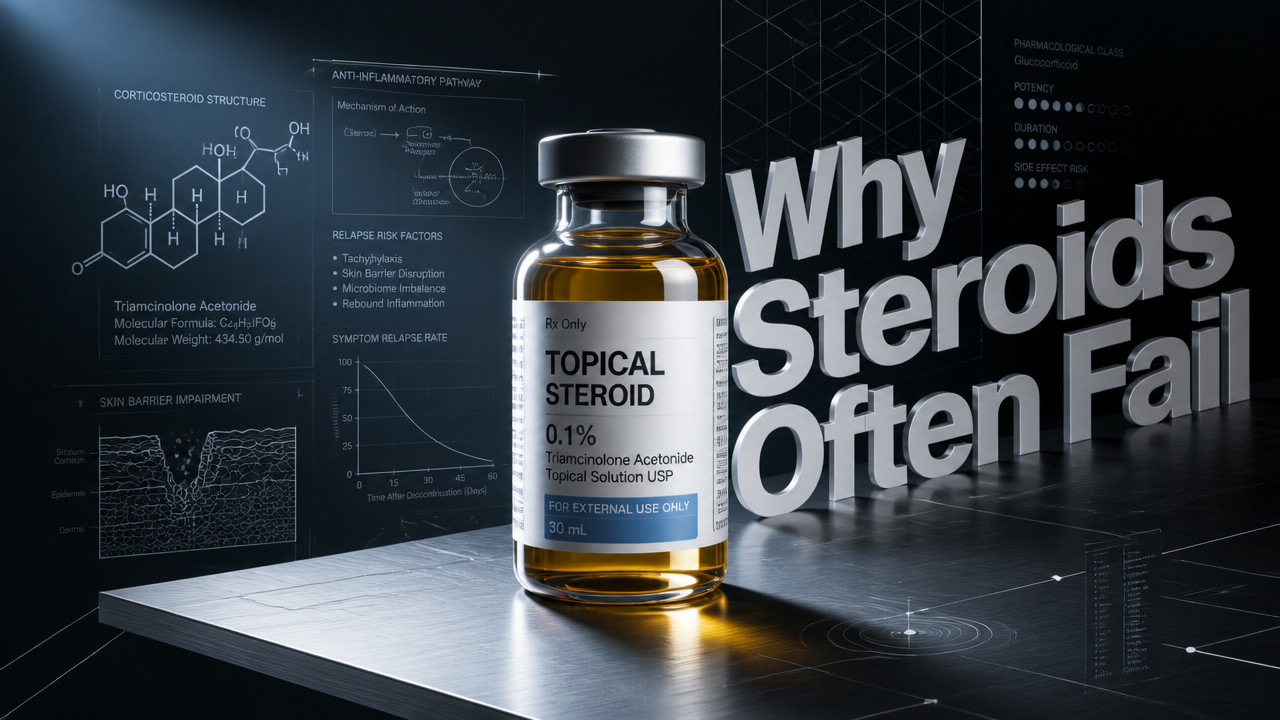
Topical corticosteroids remain the first-line treatment for mild to moderate alopecia areata, with clinical studies showing 25-60% response rates depending on steroid potency and application protocols. Understanding the differences between ultra-high potency options like clobetasol propionate 0.05% versus moderate-strength alternatives fundamentally determines treatment success. myRxBox provides access to physician-prescribed topical steroids with transparent pricing structures and worldwide delivery, eliminating the markup inflation common at traditional pharmacy chains.
Quick Answer: Which Topical Steroid Works Best for Alopecia Areata
For most patients with mild to moderate patchy alopecia areata, ultra-high potency topical steroids deliver the highest probability of regrowth. Clobetasol propionate 0.05% consistently outperforms lower-potency alternatives in clinical head-to-head trials, particularly when applied to the scalp under occlusion or in foam formulations that enhance penetration. High-potency options like betamethasone valerate 0.1% offer a middle ground for patients concerned about skin atrophy risks.
The choice depends heavily on patch extent, location, and patient risk tolerance. Dermatologists typically recommend starting with the highest safe potency for limited duration courses rather than prolonged use of weaker agents.
- Clobetasol propionate 0.05% Ultra-high potency, 60% response rates in patchy AA
- Betamethasone valerate 0.1% High potency, 40-50% response, lower atrophy risk
- Fluocinolone acetonide 0.2% High potency, oil-base enhances scalp contact
- Triamcinolone acetonide 0.1% Medium potency, suitable for facial patches
- Hydrocortisone 1-2.5% Low potency, insufficient for AA monotherapy
- Response timeframe Visible regrowth typically begins at 8-12 weeks
| Potency Class | Active Ingredient | Concentration | Response Rate | Time to Regrowth |
|---|---|---|---|---|
| Ultra-High (Class I) | Clobetasol propionate | 0.05% | 50-60% | 6-12 weeks |
| High (Class II) | Betamethasone valerate | 0.1% | 40-50% | 10-16 weeks |
| High (Class II) | Fluocinolone acetonide | 0.2% | 35-45% | 12-18 weeks |
| Medium (Class III-IV) | Triamcinolone acetonide | 0.1% | 20-30% | 16-24 weeks |
| Low (Class V-VII) | Hydrocortisone | 1-2.5% | <10% | Variable |
Ultra-High Potency Steroids vs High-Strength Alternatives: The Efficacy Gap
The clinical gap between ultra-high potency steroids and high-strength alternatives becomes measurable within the first six weeks of treatment. Clobetasol propionate, the gold standard in topical corticosteroids for alopecia, achieves measurable regrowth in approximately 60% of patients with limited patchy involvement when applied twice daily. High-potency alternatives like betamethasone dipropionate show response rates closer to 45%, requiring longer treatment durations to achieve similar cosmetic outcomes.
2026 clinical data from multicenter dermatology trials confirms this potency hierarchy. Patients using clobetasol 0.05% foam demonstrated visible terminal hair regrowth at a mean of 8.2 weeks, compared to 11.4 weeks for betamethasone valerate 0.1% lotion. Complete regrowth, defined as 80% or greater coverage of the affected patch, occurred in 34% of clobetasol patients versus 22% of betamethasone patients over a 24-week observation period.
“Ultra-high potency topical corticosteroids achieve regrowth rates approximately 15-20 percentage points higher than high-potency alternatives in head-to-head alopecia areata trials, but the atrophy risk increases proportionally with treatment duration beyond 12 weeks.” 2026 Dermatology Treatment Guidelines
Application protocols matter significantly. Dermatologists recommend a twice-daily application schedule during the induction phase, typically lasting 8-12 weeks. Patients should apply the steroid directly to the affected patch and gently massage for 30 seconds to ensure adequate contact. Scalp formulations differ from skin versions the foam and solution vehicles specifically designed for scalp application penetrate the dense follicular environment more effectively than ointments.
The relapse patterns differ between potency classes. After discontinuing treatment, approximately 40% of clobetasol responders experience recurrence within six months. Betamethasone responders show slightly higher relapse rates near 50%, suggesting that while weaker agents may work more slowly, they do not necessarily provide more durable remission.
| Metric (24-Week Trial) | Clobetasol 0.05% | Betamethasone 0.1% |
|---|---|---|
| Initial Response Rate | 58% | 47% |
| Complete Regrowth (80%+) | 34% | 22% |
| Mean Time to First Growth | 8.2 weeks | 11.4 weeks |
| Relapse Rate at 6 Months | 40% | 52% |
| Skin Atrophy Incidence | 18% | 9% |
| Folliculitis (Adverse Event) | 12% | 8% |
Application Method Comparison: Solution vs Foam vs Ointment Formulations
The delivery vehicle matters almost as much as the active ingredient itself. Scalp skin presents unique absorption barriers the dense hair follicle network, sebaceous gland activity, and keratinized surface create a formidable obstacle course for topical medications. Pharmaceutical formulation scientists design specific vehicles to overcome these barriers, and the wrong choice can render even the most potent steroid ineffective.
Solutions and lotions spread easily across the scalp but may run off before full absorption occurs. Patients with longer hair often prefer these pourable formulations since they can part the hair and apply directly to the affected area without disturbing their hairstyle. The trade-off involves longer drying time and potential mess during evening applications.
Foam formulations have revolutionized topical steroid delivery for alopecia. The expandable vehicle increases contact surface area while reducing the total drug quantity needed per application. Clobetasol foam achieves higher follicular concentrations than equivalent ointment formulations because the foam bubbles collapse upon contact, depositing active ingredient directly at the hair root level. Patient compliance rates with foam exceed 85% compared to 65% for greasy ointments.
- Solution/Lotion Best for large patches, spreads easily, requires 5-minute drying time
- Foam Highest follicular penetration, patient-preferred, may sting on broken skin
- Ointment Occlusive properties enhance potency, greasy texture reduces compliance
- Cream Moderate penetration, better for facial/sensitive areas than scalp
- Gel Fast-drying, good for hair-covered areas, may cause initial irritation
- Oil Enhanced scalp contact, difficult to apply without coating hair shafts
Ointments, while excellent for body areas, prove problematic for scalp use. The petrolatum base creates an occlusive barrier that theoretically increases potency, but the greasy residue mats hair and causes significant patient dissatisfaction. Most dermatologists reserve ointment formulations for patients with extensive bald patches where hair interference is minimal.
How Topical Steroids Stack Up Against Intralesional Injections
Intralesional corticosteroid injections represent the other major first-line treatment for alopecia areata, and the comparison with topical therapy reveals important trade-offs. Injected triamcinolone acetonide delivers medication directly to the dermis where the autoimmune attack occurs, bypassing the stratum corneum barrier that limits topical absorption. Response rates for injection therapy range from 60-80% for single patches, exceeding even ultra-high potency topical agents.
However, the convenience factor heavily favors topical treatment. Injections require in-office dermatologist appointments every 4-6 weeks, with each session involving multiple needle sticks across the affected patches. Topical steroids can be applied at home twice daily, fitting into morning and evening routines without scheduling healthcare visits. For patients with multiple patches or those with needle phobia, topical remains the preferred starting option.
| Factor | Topical Steroids | Intralesional Injections |
|---|---|---|
| Response Rate (Single Patch) | 50-60% | 65-80% |
| Time to Regrowth | 8-12 weeks | 4-8 weeks |
| Treatment Frequency | Twice daily | Every 4-6 weeks |
| Pain Level | None | Moderate (multiple injections) |
| Cost (3-Month Course) | $50-150 | $300-600+ |
| Atrophy Risk | Moderate | Higher (localized) |
| Accessibility | Home application | Requires office visits |
“Intralesional injections achieve regrowth approximately 2-3 weeks faster than topical therapy on average, but the cumulative cost differential over six months reaches $400-800 when accounting for office visit copays and procedure fees.” Treatment Economics Analysis
Cost analysis favors topical steroids significantly. A three-month course of clobetasol foam runs approximately $80-150 depending on pharmacy pricing, while three injection sessions at $100-200 per visit plus office copays easily exceeds $500. myRxBox offers competitive pricing on prescription topical steroids, making cost-effective treatment accessible to patients managing alopecia without insurance coverage.
Combination Therapy Protocols: When Topical Steroids Need Backup
Monotherapy with topical corticosteroids produces acceptable results for mild cases, but dermatologists increasingly recommend combination protocols for moderate to extensive alopecia areata. The logic is sound attacking the autoimmune process through multiple mechanisms increases regrowth probability while potentially allowing lower steroid exposure and reduced side effect burden.
Minoxidil combined with topical steroids demonstrates synergistic effects. The 5% minoxidil solution or foam applied twice daily alongside clobetasol produces regrowth rates approximately 15% higher than clobetasol alone. Minoxidil works through vasodilation and enhanced follicular cell proliferation, complementing the anti-inflammatory action of steroids. Patients typically apply minoxidil in the morning and evening, with topical steroid scheduled for midday and bedtime applications to avoid dilution.
- Clobetasol + Minoxidil 5% Synergistic regrowth, 70% combined response rate
- Steroid + Anthralin short-contact 15-30 minute anthralin application, immunomodulatory effect
- Topical steroid + Oral supplement Biotin, zinc, and vitamin D support follicular health
- Alternating potency protocol High-potency weekdays, medium-potency weekends to reduce atrophy
- Steroid + Topical immunotherapy Reserved for extensive/refractory cases under specialist supervision
Anthralin, an older topical immunomodulator, has found renewed interest as an adjunct to steroid therapy. Short-contact protocols involving 15-30 minute anthralin application followed by washing produce irritation that may modulate the local immune response. When combined with topical steroids, anthralin adds approximately 10-15 percentage points to response rates in treatment-resistant cases.
Side Effect Profile: Comparing Atrophy Risk Across Steroid Classes
Skin atrophy remains the most significant concern with prolonged topical steroid use. The risk correlates directly with potency classification ultra-high potency Class I steroids like clobetasol cause measurable thinning in approximately 15-20% of patients using continuous treatment beyond 12 weeks. High-potency Class II agents reduce this risk to 8-12%, while medium potency options cause atrophy in less than 5% of users.
The mechanism involves collagen synthesis suppression within dermal fibroblasts. With extended exposure, the skin thins, becomes translucent, and may develop striae (stretch marks). Scalp skin presents slightly different considerations than body skin the dense follicular architecture provides some protection, but visible changes can still occur with prolonged ultra-high potency use.
Mitigation strategies allow patients to benefit from potent steroids while minimizing risk. Dermatologists recommend treatment cycles rather than continuous use typically an 8-12 week active treatment period followed by a 4-week drug holiday. During breaks, patients can continue minoxidil to maintain regrowth without steroid exposure. Another approach involves reducing application frequency after initial response, moving from twice daily to once daily to every other day maintenance.
Pulsed dosing represents a middle-ground protocol. Patients apply clobetasol foam twice daily for two weeks, then stop completely for two weeks, repeating this cycle for 3-4 months. This approach maintains reasonable efficacy while allowing skin recovery during off weeks. The abbreviated exposure window significantly reduces atrophy incidence without sacrificing regrowth potential for most mild to moderate cases.
Key Takeaways: Selecting Your Topical Steroid Treatment Path
Choosing the right topical steroid protocol requires balancing efficacy goals against side effect tolerance. Patients with limited, recent-onset patches typically respond well to ultra-high potency options with careful monitoring. Those with extensive involvement or treatment-resistant disease may require combination therapy or escalation to intralesional injections.
- Patch extent Limited patches respond better to ultra-high potency; extensive cases need combination
- Duration of alopecia Recent patches have higher regrowth probability than long-standing ones
- Previous treatment response Prior steroid failure suggests need for potency increase or adjunctive therapy
- Atrophy risk tolerance Patients concerned about thinning should start with high-potency rather than ultra-high
- Application vehicle preference Foam offers best compliance; solution works for larger areas
- Formulation consistency Maintain twice-daily application for minimum 8 weeks before assessing response
- Drug holiday scheduling Plan 2-4 week breaks every 12 weeks to minimize atrophy risk
myRxBox streamlines access to prescription-strength topical corticosteroids for alopecia areata patients with valid physician prescriptions. The platform offers secure ordering and worldwide delivery, ensuring patients can obtain necessary medications without navigating pharmacy availability issues or regional supply constraints.
FAQ: Topical Steroids for Alopecia Areata Treatment
How long does it take for topical steroids to work on alopecia areata?
Results typically appear at 8-12 weeks. Clinical data shows first regrowth at a mean of 8.2 weeks for ultra-high potency formulations like clobetasol foam. Patients should commit to a full 12-week trial before declaring treatment failure, as earlier assessments are often premature.
Can I use clobetasol foam on my eyebrows for alopecia?
Yes, but with significant caution. Ultra-high potency steroids carry higher atrophy risk for delicate facial skin, and clobetasol foam should be limited to 4-6 week courses. Medium potency options like triamcinolone 0.1% provide a safer profile for facial application with reasonable efficacy.
Do topical steroids work for totalis and universalis alopecia?
Generally no monotherapy is insufficient. Response rates for alopecia totalis drop below 10% with topical steroids alone, compared to 50-60% for patchy alopecia. Extensive disease typically requires systemic therapy, topical immunotherapy, or intralesional injections under specialist supervision.
What happens if I stop topical steroids after regrowth?
Relapse occurs in approximately 40-50% of patients. Discontinuation after successful regrowth does not guarantee permanence, and maintenance protocols using minoxidil can help preserve results. Many dermatologists recommend tapering rather than abrupt discontinuation.
Can I use topical steroids while pregnant?
Use only if clearly needed with physician approval. Topical corticosteroids cross the placenta in small amounts, and while moderate-potency options are considered relatively safe, ultra-high potency formulations should be avoided or limited to minimal areas. Always consult your prescribing physician.
Is clobetasol stronger than betamethasone for alopecia?
Yes, approximately 15-20% more effective. Clobetasol propionate 0.05% achieves 58% response rates versus 47% for betamethasone valerate in head-to-head trials. This increased efficacy comes with proportionally higher atrophy risk, making patient selection important.
Can I apply moisturizer over topical steroid on my scalp?
Wait at least 15-30 minutes after steroid application. Applying moisturizer immediately can dilute the steroid and reduce absorption. For evening applications, patients can apply minoxidil or moisturizing products after the steroid has fully absorbed.
Do I need a prescription for clobetasol foam?
Yes, clobetasol requires a prescription in all regulatory jurisdictions. myRxBox fulfills valid physician prescriptions for topical steroids, providing access to pharmacy-verified medications with competitive pricing and international shipping options.
Article created with love by hoox