One medicine requires a prescription. Another can be picked up directly from a pharmacy shelf. Why?
The distinction is not simply about whether a medicine is “strong.” It relates to how the medicine can be used safely and appropriately under the rules of the relevant jurisdiction.
What Is Prescription Medicine?
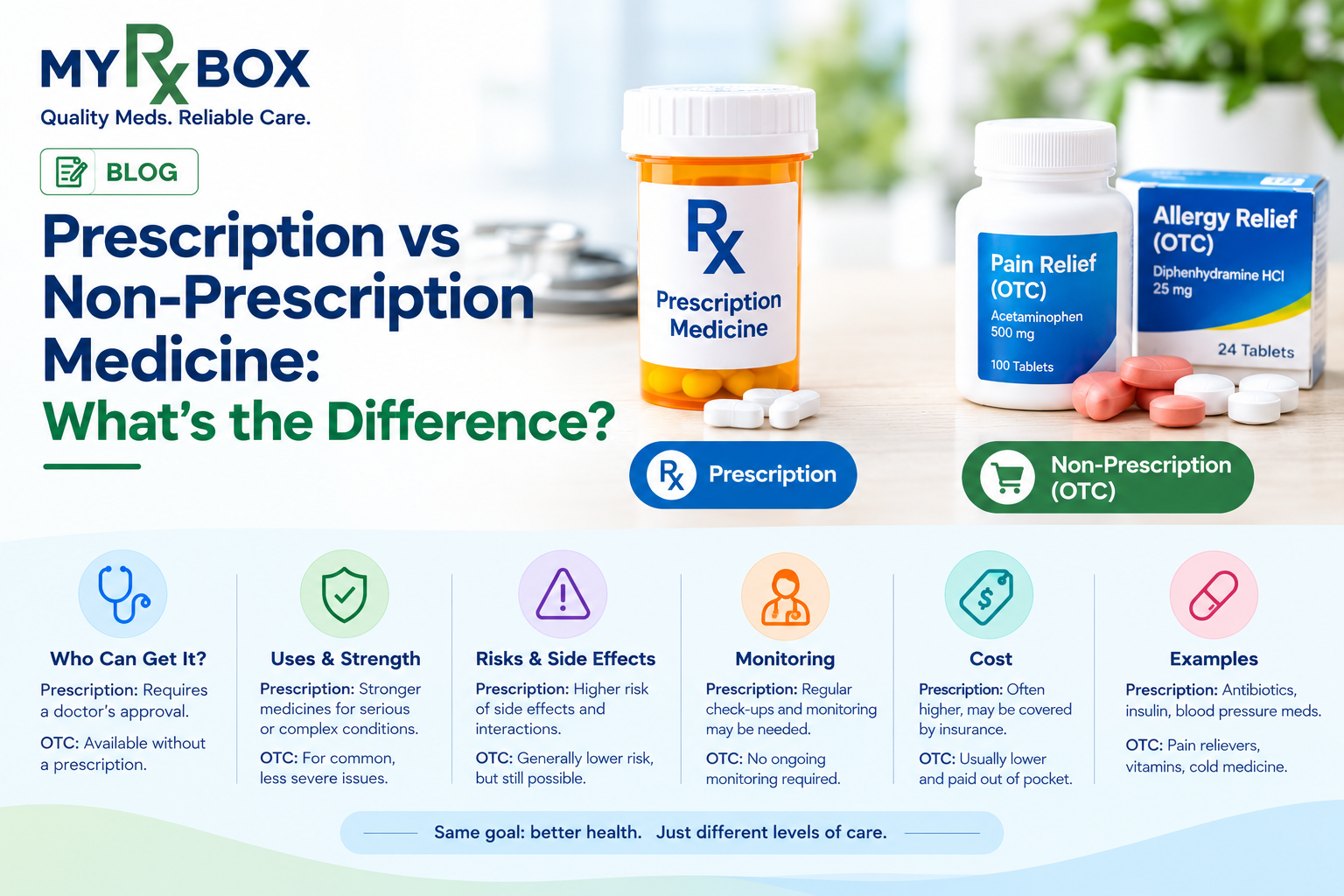
Prescription medicines require authorization from an appropriately qualified healthcare professional under applicable rules. They may require professional involvement because of diagnosis, dosage selection, monitoring, contraindications, interaction risks or potential adverse effects.
What Is Non-Prescription Medicine?
Non-prescription medicine is commonly called OTC medicine, over-the-counter medicine or non-Rx medicine. These products can be purchased without a prescription when marketed for permitted OTC use.
That does not mean OTC medicines are risk-free.
Is Prescription Medicine Stronger?
Not necessarily. “Prescription” and “OTC” are regulatory categories, not a universal strength ranking.
Some ingredients may exist in different prescription and OTC products depending on strength, formulation, intended use and country.
Are OTC Medicines Completely Safe?
No medicine should be treated as automatically harmless. OTC medicines can still cause problems through excessive doses, allergies, interactions, duplicate ingredients or use in unsuitable medical conditions.
Read the label every time.
What Does an OTC Drug Facts Label Tell You?
In the United States, OTC Drug Facts labeling commonly identifies:
- Active ingredient
- Purpose
- Uses
- Warnings
- Directions
- Inactive ingredients
- Storage information
Why Active Ingredient Matters
People can accidentally take two products containing the same active ingredient. For example, a multi-symptom product can contain an ingredient also present in another medicine.
Reading the ingredient section helps identify duplication.
Use the MyRxBox Medicine Glossary to learn what individual drug names mean.
Can a Prescription Medicine Become OTC?
In some circumstances, medicines can transition from prescription to OTC status for particular uses or strengths after regulatory review. That does not mean every strength or indication automatically becomes non-prescription.
Never Share Prescription Medicine
A prescription written for one person takes into account that patient’s clinical circumstances. Do not share prescription medication simply because another person has similar symptoms.
Prescription vs OTC: Quick Comparison
| Feature | Prescription Medicine | Non-Prescription / OTC |
|---|---|---|
| Prescription required | Yes, when legally classified as prescription-only | No for permitted OTC use |
| Professional supervision | Often central to selection and monitoring | Still seek help when uncertain |
| Risk-free? | No | No |
| Label directions matter? | Yes | Yes |
| Interactions possible? | Yes | Yes |
Frequently Asked Questions
What does non-prescription mean?
It means the medicine can legally be obtained without a prescription for the relevant marketed use in that jurisdiction.
Does OTC mean no side effects?
No. OTC medicines can still have side effects, warnings and interactions.
Is prescription medicine stronger?
Not necessarily.
Can I use someone else’s prescription?
Prescription medicines should be used according to the prescription and dispensing instructions for the intended patient.
Where can I learn about an ingredient?
Visit the Medicine Glossary.
Medical disclaimer: General educational information only.