If you’ve been researching fenbendazole, you’ve almost certainly noticed the bewildering range of doses being discussed online: 222mg, 444mg, 500mg, 888mg, 1000mg. Where do these numbers come from, who uses which dose, and what’s actually the difference? This guide cuts through the confusion with a clear breakdown of each dosage, its origin, and the protocols that use it.
⚠️ Medical Disclaimer Fenbendazole is not approved for human use in most countries and is not an approved cancer treatment anywhere. This article is educational only. Always consult a licensed physician before using fenbendazole.
Where These Dosage Numbers Come From
Unlike pharmaceutical drugs that arrive with precisely studied human dosing schedules, fenbendazole dosing for human use has largely evolved from three sources: veterinary product packaging, the Joe Tippens protocol (which inadvertently created the “222mg” standard), and more recent attempts by researchers and clinicians to explore higher doses with safety monitoring.
Understanding these origins helps explain why you see such a wide range of doses in community discussions, patient forums, and even some clinical contexts.
The 222mg Dose: The Joe Tippens Standard
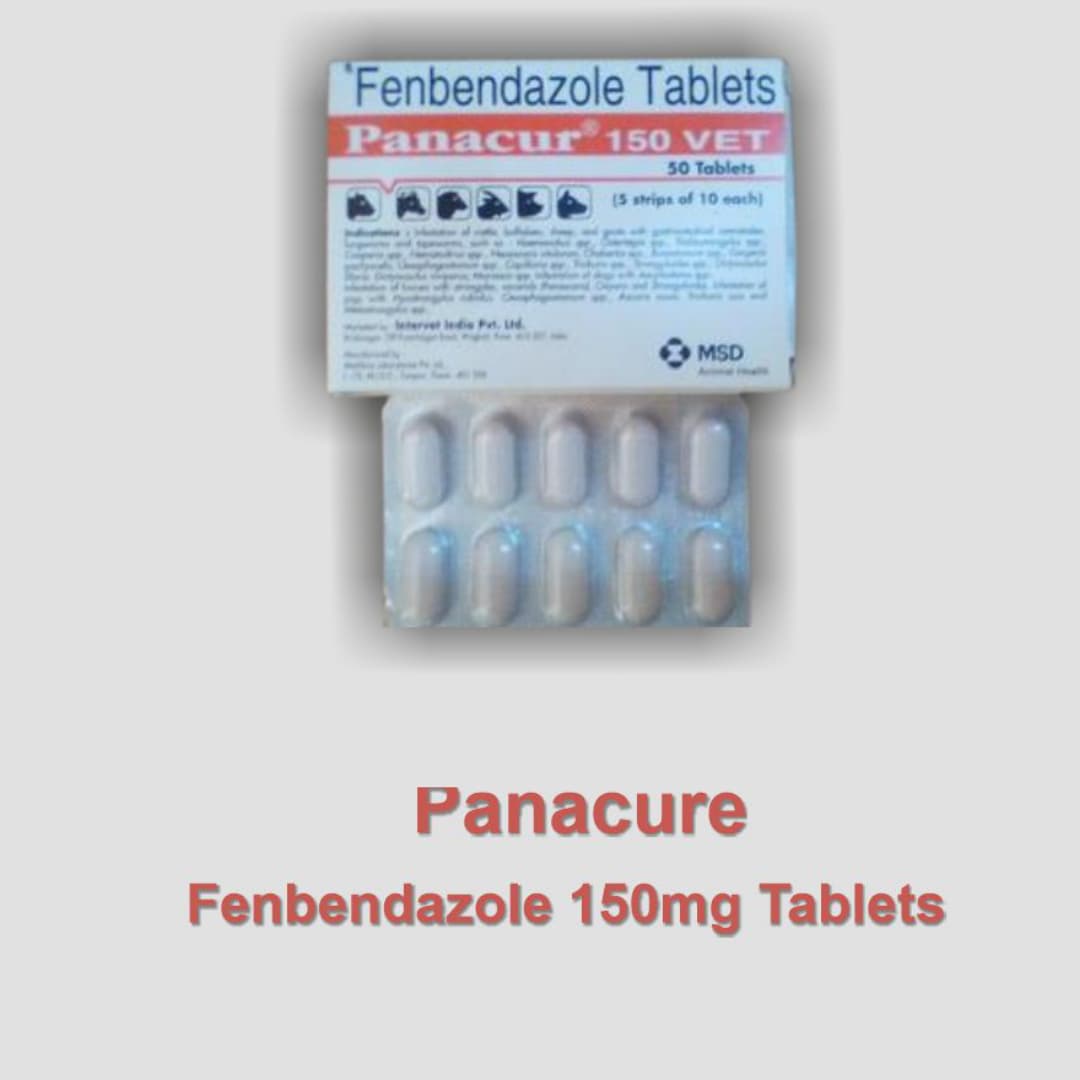
The 222mg dose is the most widely discussed and used fenbendazole dose in the human cancer community. Its origin is entirely practical: Panacur C, the widely available dog dewormer manufactured by Merck Animal Health, comes in individual sachets containing exactly 222mg of fenbendazole per packet (the small dog dose). When Joe Tippens began his self-treatment in 2016, he used one Panacur C packet per dose.
Because Panacur C is sold over the counter in pet stores and is inexpensive, it became the de facto source of fenbendazole for early adopters of the Tippens protocol. Over time, pharmaceutical-grade fenbendazole in 222mg capsules became available — providing a cleaner, more consistent alternative without the veterinary excipients.
The standard 222mg protocol (3-on/4-off):
- Take 222mg fenbendazole on 3 consecutive days (e.g., Monday, Tuesday, Wednesday)
- Rest for 4 days (Thursday through Sunday)
- Repeat the cycle continuously
- Typically taken with a fatty meal to improve absorption
- Often combined with Vitamin E Succinate (400 IU) and curcumin (600mg)
💡 Why the 3-on/4-off cycling?This pattern mimics the standard veterinary deworming schedule. The off-days allow the liver to clear the drug and recover. In the Tippens protocol, this schedule is maintained long-term. Some practitioners advocate for a continuous daily low dose instead, though the research basis for either schedule is not established in humans.
The 444mg Dose: Doubling the Standard
The 444mg dose — two 222mg units or one 444mg capsule — emerged from patient communities seeking more aggressive protocols, particularly those with advanced-stage cancers. Some practitioners and cancer coaches have suggested this higher dose may provide better tissue penetration and more sustained plasma levels.
There is limited scientific data comparing 222mg vs 444mg in humans. The rationale is that higher doses produce higher plasma concentrations, potentially achieving better intratumoral drug levels. However, liver enzyme elevation is more frequently reported at higher doses, making regular LFT (liver function test) monitoring especially important.
The 444mg dose is generally used with the same 3-on/4-off schedule rather than continuously, and should only be considered with medical supervision given the higher hepatic load.
The 500mg Dose: The Mebendazole Connection
The 500mg dose appears frequently in the context of mebendazole rather than fenbendazole — mebendazole 500mg is the standard human pharmaceutical dose for intestinal parasites. Some patients and practitioners conflate the two drugs (they are closely related benzimidazoles) and apply similar dosing logic.
When 500mg fenbendazole is used, it represents approximately a 125% increase over the Tippens standard dose. Some cancer patients report using 500mg daily continuously (not cycling) under physician supervision. No controlled human trial has established 500mg as a superior dose to 222mg for any indication.
The 888mg Dose: Advanced Protocols
888mg represents four Panacur C packets or four standard 222mg capsules taken together. This dose is primarily discussed in the context of aggressive cancers where patients are pursuing maximal dosing while monitoring for liver toxicity. At this dose level, the risk of hepatotoxicity increases meaningfully.
Any protocol using 888mg fenbendazole should be conducted under close medical supervision with baseline and regular liver function tests (ALT, AST, bilirubin). Cases of drug-induced liver injury at high benzimidazole doses have been documented in the medical literature, though they are uncommon at doses under 1000mg.
The 1000mg Dose: Research-Grade Dosing
1000mg (1g) of fenbendazole per dose represents the highest tier commonly discussed. This dose appears primarily in the Korean observational literature and in patients under close clinical monitoring. A small number of Korean case studies have documented patients taking 1000mg daily (some continuously, some cycling) with mixed outcomes.
At 1000mg, the benefit-risk calculation shifts significantly. Liver enzyme monitoring is essential. The 2020 Korean study that examined higher-dose fenbendazole noted a subset of patients developing elevated transaminases that resolved upon dose reduction or discontinuation.
Dosage Comparison Summary
| Dose | Origin / Context | Schedule | Key Monitoring | Risk Level |
|---|---|---|---|---|
| 222mg | Joe Tippens / Panacur C standard | 3 days on / 4 days off | Baseline LFTs; periodic recheck | Low–Moderate |
| 444mg | Double Tippens dose; community-adopted | 3 days on / 4 days off | LFTs every 4–6 weeks | Moderate |
| 500mg | Mebendazole-aligned; daily continuous variants | Daily or 3-on/4-off | LFTs every 4–6 weeks | Moderate |
| 888mg | Advanced cancer protocols; physician-supervised | 3 days on / 4 days off | LFTs every 2–4 weeks | Moderate–High |
| 1000mg | Korean research context; clinical oversight | Varies; daily in some studies | LFTs every 2 weeks minimum | High — medical supervision required |
How to Take Fenbendazole for Maximum Absorption
Fenbendazole is poorly absorbed on an empty stomach. Bioavailability studies in animals (and extrapolated human data) consistently show that taking it with a high-fat meal dramatically improves absorption. Practical recommendations include:
- Take fenbendazole with a meal containing healthy fats (avocado, olive oil, eggs, full-fat dairy)
- Avoid taking it with just water or on an empty stomach
- Some users take it alongside a fish oil or MCT oil supplement for this reason
- Vitamin E succinate is often taken concurrently — it is fat-soluble and also absorbs better with fat
Drug Interactions to Be Aware Of
Fenbendazole is primarily metabolized by the liver’s CYP450 enzyme system. Potential interactions include:
- Chemotherapy agents: Many chemo drugs are also CYP450 substrates; combining with fenbendazole may alter blood levels of either drug
- Immunosuppressants: Similar CYP450 interaction concerns apply
- Warfarin/blood thinners: Benzimidazoles can enhance anticoagulant effects
- Alcohol: Increases hepatic load and should be avoided during treatment
The Drugs.com interaction checker and consultation with a pharmacist are strongly recommended before starting any fenbendazole protocol alongside other medications.
Frequently Asked Questions
Should I start at 222mg or a higher dose?
Most people start with the standard 222mg 3-on/4-off protocol and assess tolerance for 2–4 weeks before considering any increase. Starting with the lowest effective dose and monitoring liver function before escalating is standard harm-reduction practice for any off-label compound.
Can I take fenbendazole every day instead of cycling?
Some practitioners recommend daily dosing while others maintain the 3-on/4-off cycle. There is no controlled human data establishing superiority of either approach. Daily dosing increases cumulative hepatic exposure, so more frequent LFT monitoring is advisable if choosing a continuous schedule.
Is pharmaceutical-grade fenbendazole better than Panacur C?
Pharmaceutical-grade fenbendazole in capsule form offers consistent dosing without veterinary excipients (inactive ingredients formulated for dogs, not humans). For extended human use, pharmaceutical-grade formulations are generally preferable for consistency and purity.
Fenbendazole in Every Dosage You Need
myRxbox carries 222mg, 444mg, 500mg, 888mg, and 1000mg — pharmaceutical-grade, shipped worldwide.