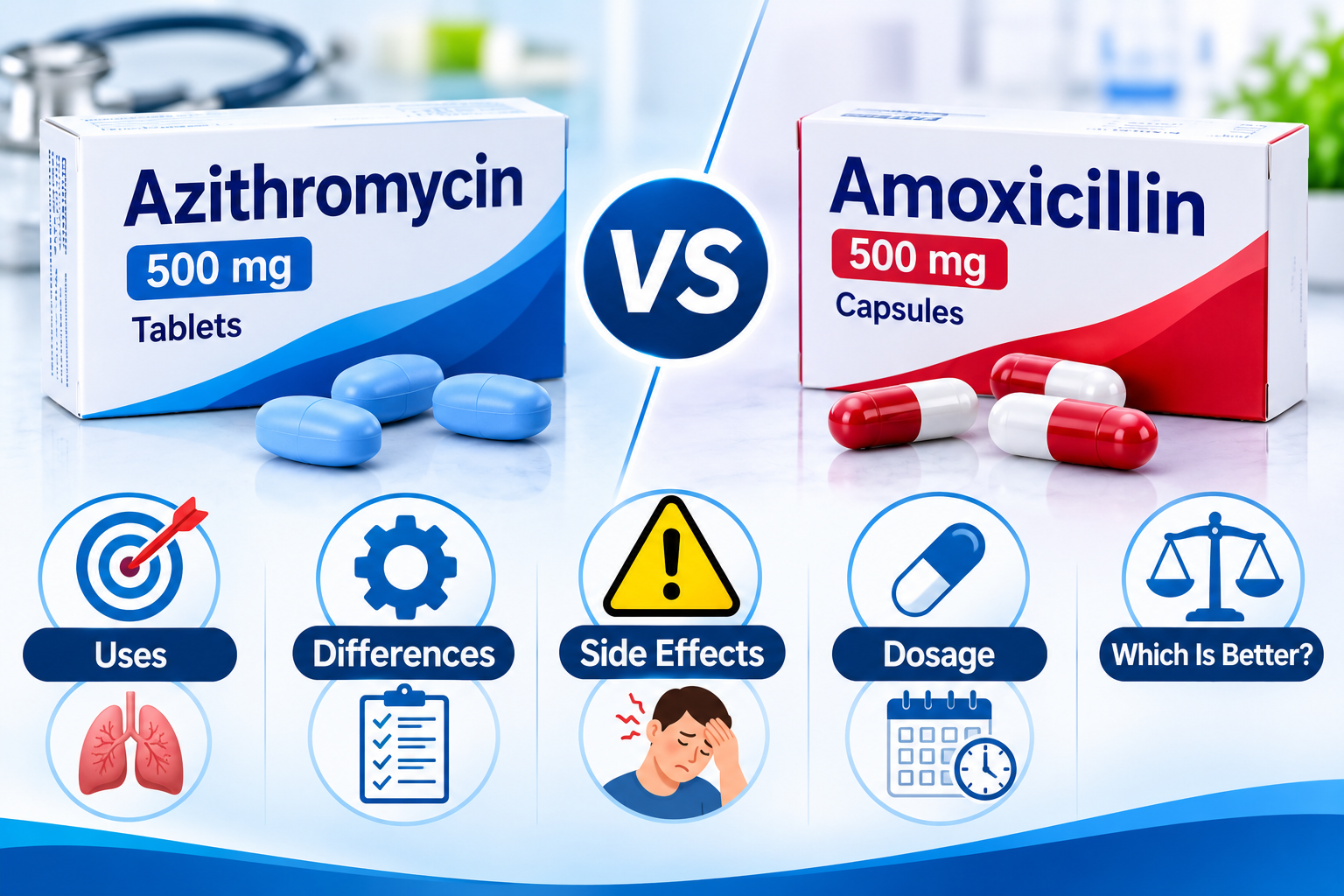
Azithromycin and amoxicillin are two widely prescribed antibiotics used to treat bacterial infections. Although both medicines can treat certain respiratory, throat, ear, and skin infections, they belong to different antibiotic classes and work differently inside the body.
One of the most common questions patients ask is: Azithromycin vs amoxicillin — which antibiotic is better?
The answer depends on the infection being treated, the bacteria responsible, antibiotic resistance, allergies, and a person’s medical history.
Amoxicillin is a penicillin-type antibiotic commonly prescribed for infections such as strep throat and certain ear infections. Azithromycin belongs to the macrolide antibiotic family and may be prescribed for specific respiratory infections, including infections caused by certain bacteria that amoxicillin cannot treat.
This guide compares both antibiotics, explains their medical uses, and discusses side effects, treatment duration, and safety considerations.
What Is Azithromycin?
Azithromycin is a prescription antibiotic belonging to the macrolide class. It works by interfering with bacterial protein production, preventing susceptible bacteria from growing and multiplying.
Azithromycin is commonly associated with the brand name Zithromax and the term Z-Pak, which describes a particular short-course tablet package.
Healthcare professionals may prescribe azithromycin for selected bacterial infections, including:
- Certain cases of community-acquired pneumonia
- Respiratory infections caused by susceptible bacteria
- Some bacterial skin infections
- Certain infections in patients who cannot take penicillin
- Pertussis (whooping cough)
Azithromycin is also useful against certain atypical bacteria, including Mycoplasma pneumoniae, which lack the cell wall targeted by penicillin antibiotics.
One notable feature of azithromycin is its long persistence in body tissues. This allows many prescribed treatment regimens to use once-daily dosing over a relatively short period.
MyRxBox provides product information for Azithromycin 250mg (Azipro 250) and Azithromycin 500mg (Azipro 500).
However, azithromycin is not appropriate for every bacterial infection, and growing resistance has limited its use for some common conditions.
What Is Amoxicillin?
Amoxicillin is a prescription antibiotic belonging to the penicillin family. It treats infections caused by bacteria that are susceptible to its effects.
Unlike azithromycin, amoxicillin works by interfering with the formation of bacterial cell walls. This damages the bacteria and leads to their destruction.
Doctors frequently prescribe amoxicillin for conditions such as:
- Confirmed group A streptococcal throat infections
- Certain bacterial ear infections
- Some cases of bacterial pneumonia
- Selected bacterial sinus infections
- Certain skin and dental infections
Amoxicillin may also be used with other medications to treat Helicobacter pylori, a bacterium associated with certain stomach ulcers.
The medication has a long history of clinical use and remains a recommended first-choice antibiotic for several common bacterial infections.
Examples include Amoxicillin 250mg (Cipmox) and Amoxicillin 500mg (Cipmox).
Amoxicillin does not work against all bacteria, including organisms without cell walls, such as Mycoplasma pneumoniae.
Azithromycin vs Amoxicillin: Key Differences
Both antibiotics treat bacterial infections, but their drug classes, antibacterial activity, and safety considerations differ.
| Feature | Azithromycin | Amoxicillin |
|---|---|---|
| Antibiotic class | Macrolide | Penicillin |
| How it works | Blocks bacterial protein production | Disrupts bacterial cell wall formation |
| Common brand name | Zithromax | Amoxil |
| Typical dosing frequency | Often once daily | Often two or three times daily |
| Treatment duration | Often 3–5 days, depending on infection | Varies by infection; some treatments require 10 days |
| Strep throat | Alternative in selected penicillin-allergic patients | Preferred treatment |
| Atypical pneumonia | Active against certain atypical bacteria | Not active against Mycoplasma |
| Penicillin allergy | May be an option after medical assessment | Generally avoided in confirmed serious penicillin allergy |
| Notable safety concerns | QT prolongation, drug interactions, gastrointestinal effects | Allergic reactions, gastrointestinal effects, skin rash |
| Prescription required | Yes | Yes |
Neither medicine is universally stronger. Their effectiveness depends on whether the bacteria causing the infection are susceptible to the prescribed antibiotic.
Is Azithromycin Stronger Than Amoxicillin?
Azithromycin is not necessarily stronger than amoxicillin.
The two medications target bacteria through different mechanisms, which means each can be more appropriate for particular infections.
For example, amoxicillin remains a preferred treatment for confirmed group A streptococcal throat infections because the bacteria responsible continue to respond reliably to penicillin antibiotics.
Azithromycin may be prescribed when a patient has a suitable indication and cannot take certain penicillin antibiotics. However, resistance to azithromycin among some bacteria can reduce its effectiveness.
On the other hand, azithromycin can treat infections caused by certain atypical bacteria that amoxicillin cannot effectively target.
Therefore, comparing their strength without knowing the infection and its likely cause does not provide a medically meaningful answer.
The correct antibiotic is the medicine that treats the specific bacteria while presenting an acceptable safety profile for the patient.
Azithromycin vs Amoxicillin for Different Infections
1. Strep Throat
Amoxicillin is generally the preferred antibiotic for confirmed group A streptococcal pharyngitis, commonly known as strep throat.
The Centers for Disease Control and Prevention (CDC) recommends penicillin or amoxicillin as first-choice treatments for this infection.
Azithromycin may be considered for certain patients with penicillin allergies, although resistance varies by location.
Most sore throats are caused by viruses and do not require antibiotics.
Key difference: Amoxicillin is usually preferred for confirmed strep throat, while azithromycin is an alternative in selected circumstances.
2. Sinus Infections
Sinus infections are frequently caused by viruses, meaning antibiotic treatment is often unnecessary.
When a clinician diagnoses acute bacterial sinusitis and determines that antibiotics are needed, amoxicillin or amoxicillin-clavulanate may be prescribed.
Azithromycin is generally not recommended as an initial treatment for acute bacterial sinusitis in the United States because resistance among common respiratory bacteria can reduce its effectiveness.
Patients with persistent or worsening symptoms should seek a medical assessment rather than choosing an antibiotic themselves.
Key difference: Amoxicillin-based treatments are generally preferred over azithromycin when antibiotic therapy is indicated for routine bacterial sinusitis.
3. Ear Infections
Amoxicillin is commonly prescribed as a first-choice treatment for acute bacterial middle ear infections, particularly in children.
Not every ear infection requires antibiotics. Some cases improve with observation and appropriate pain management.
Azithromycin may be considered in selected patients with particular antibiotic allergies, although resistance and clinical effectiveness must be considered.
Key difference: Amoxicillin is generally preferred when antibiotics are needed for uncomplicated acute middle ear infections.
4. Pneumonia
Pneumonia can be caused by different organisms, including typical and atypical bacteria.
Amoxicillin may be prescribed for certain cases of community-acquired bacterial pneumonia, particularly when Streptococcus pneumoniae is suspected.
Azithromycin can be useful when atypical bacteria, such as Mycoplasma pneumoniae, are involved.
However, azithromycin alone is not appropriate for every case of pneumonia because resistance and other patient-specific factors affect treatment recommendations.
Some patients require combination antibiotic therapy or hospital treatment.
Key difference: The suspected bacteria and the patient’s medical condition determine which antibiotic is appropriate.
5. Bronchitis
Acute bronchitis is usually caused by viruses.
For otherwise healthy individuals with uncomplicated acute bronchitis, antibiotics are generally not recommended.
Neither azithromycin nor amoxicillin should be used simply because a patient has a persistent cough or produces colored mucus.
Certain bacterial illnesses, such as pertussis, require a different medical assessment and may be treated with azithromycin.
Key difference: Most cases of acute bronchitis do not benefit from either antibiotic.
Azithromycin vs Amoxicillin: Which Works Faster?
Many patients assume that azithromycin works faster because it is often prescribed for fewer days.
However, a shorter treatment course does not necessarily mean an antibiotic produces faster symptom relief.
Azithromycin remains in body tissues for an extended period, allowing certain infections to be treated with relatively short dosing schedules.
Amoxicillin is processed differently and often requires more frequent dosing.
When a bacterial infection responds to the prescribed antibiotic, patients may begin noticing improvement within the first few days. The exact time depends on the infection, its severity, and individual health factors.
If symptoms worsen or fail to improve as expected, contact the prescribing healthcare professional.
Do not switch antibiotics simply because another medicine is commonly given for a shorter period.
Azithromycin vs Amoxicillin Side Effects
Like all prescription antibiotics, both medications can produce side effects.
Common Side Effects of Azithromycin
Possible side effects include:
- Nausea
- Diarrhea
- Vomiting
- Abdominal discomfort
- Headache
Most gastrointestinal side effects are mild, but some patients experience more serious reactions.
Common Side Effects of Amoxicillin
Possible side effects include:
- Nausea
- Diarrhea
- Vomiting
- Skin rash
- Digestive discomfort
Amoxicillin can also cause allergic reactions, which may range from mild symptoms to severe anaphylaxis.
Important Safety Differences
Azithromycin and heart rhythm
Azithromycin can prolong the QT interval, an electrical measurement associated with heart rhythm.
This may increase the risk of dangerous heart rhythm disturbances in susceptible patients, particularly those with existing QT prolongation, certain heart conditions, low potassium or magnesium levels, or medications that affect heart rhythm.
Amoxicillin and penicillin allergy
Patients with confirmed serious allergies to penicillin antibiotics generally should not take amoxicillin without specialist medical guidance.
Severe allergic reactions can involve swelling, breathing difficulties, or anaphylaxis.
Side effects that require medical attention
Both medications have been associated with serious allergic reactions and antibiotic-associated diarrhea, including Clostridioides difficile infection.
Seek urgent medical care for difficulty breathing, facial or throat swelling, fainting, or severe skin reactions. Severe or bloody diarrhea also requires prompt medical assessment.
Azithromycin vs Amoxicillin Dosage and Treatment Duration
The dosage and duration of either medicine depend on the infection, patient age, body weight, kidney or liver function, and prescribing instructions.
Azithromycin Treatment Duration
Azithromycin is often prescribed once daily.
Some conditions are treated with three-day or five-day regimens, while others require different schedules.
A Z-Pak commonly contains a five-day course, but not all azithromycin prescriptions follow that schedule.
Amoxicillin Treatment Duration
Amoxicillin is commonly prescribed at intervals of approximately 8 or 12 hours, depending on the prescribed regimen.
Treatment may last several days or longer, depending on the infection.
For example, confirmed strep throat is commonly treated with a 10-day course of oral amoxicillin.
Important: The tablet strength does not determine the correct treatment course by itself. Always follow the prescribed dose and duration rather than selecting a regimen based on package size.
Can You Take Azithromycin and Amoxicillin Together?
In certain clinical situations, doctors prescribe two antibiotics together to cover different bacteria.
For example, some patients with community-acquired pneumonia may require a combination regimen that includes a beta-lactam antibiotic and a macrolide.
However, combining azithromycin and amoxicillin is not appropriate for every infection.
Taking both without medical supervision may increase the risk of side effects, drug interactions, and unnecessary antibiotic use.
Never combine these medications unless a qualified healthcare professional specifically prescribes them together.
Can You Switch From Amoxicillin to Azithromycin?
A healthcare provider may recommend changing antibiotics if:
- The original antibiotic is not appropriate for the bacteria involved.
- The infection is not responding as expected.
- Laboratory results identify resistance.
- The patient develops an allergy or another serious adverse reaction.
- The diagnosis changes.
However, symptoms that remain for a day or two do not automatically mean treatment has failed.
Some infections require additional time before symptoms begin to improve.
Consult the prescribing clinician before stopping one antibiotic and starting another.
Azithromycin vs Amoxicillin: Drug Interactions and Precautions
Before taking either antibiotic, tell your doctor or pharmacist about all prescription medications, over-the-counter products, vitamins, and supplements you use.
Azithromycin may interact with certain medications, including some drugs that affect heart rhythm. It can also require additional monitoring in patients taking warfarin.
Certain antacids containing aluminum or magnesium may need to be separated from azithromycin tablets or liquid by a specific time interval.
Amoxicillin also has potential drug interactions, including with medications such as warfarin and methotrexate.
Patients with kidney disease, liver disease, pregnancy, breastfeeding considerations, or a history of serious medication reactions should receive individual medical guidance.
Neither medication should be used without an appropriate prescription.
Why Antibiotic Resistance Is Important
Antibiotic resistance is a growing public health concern.
Bacteria can develop mechanisms that allow them to survive exposure to medications that previously worked against them.
Resistance is one reason azithromycin is not recommended for routine treatment of some bacterial infections, even though it has broad antibacterial activity.
Taking antibiotics unnecessarily can contribute to resistance and expose patients to avoidable adverse reactions.
Antibiotics also do not treat viral illnesses such as:
- Common cold
- Influenza
- COVID-19
- Most uncomplicated acute bronchitis cases
A clinician should determine whether symptoms suggest a bacterial infection and whether antibiotic treatment is appropriate.
Frequently Asked Questions About Azithromycin vs Amoxicillin
Is azithromycin better than amoxicillin for a throat infection?
For confirmed group A strep throat, amoxicillin is generally preferred. Azithromycin may be used in selected patients with penicillin allergies, depending on resistance patterns and individual circumstances.
Which is better for a chest infection, azithromycin or amoxicillin?
It depends on the diagnosis and bacteria involved. Amoxicillin may treat certain typical bacterial respiratory infections, while azithromycin is active against some atypical bacteria. Many chest infections are viral and do not require antibiotics.
Is azithromycin more powerful than amoxicillin?
Neither antibiotic is universally more powerful. Their effectiveness depends on the bacteria responsible for the infection and whether those bacteria are susceptible to the medication.
Why is azithromycin sometimes prescribed for only five days?
Azithromycin remains in body tissues for an extended period. This allows certain bacterial infections to be treated with shorter dosing schedules. The appropriate duration still depends on the diagnosis.
Can azithromycin treat infections that amoxicillin cannot?
Yes. Azithromycin is active against certain bacteria, such as Mycoplasma pneumoniae, that are not susceptible to amoxicillin because they lack a cell wall.
Does amoxicillin have fewer side effects than azithromycin?
Both medicines have possible side effects. Amoxicillin is associated with penicillin-related allergic reactions, while azithromycin has particular heart rhythm warnings. The individual patient’s medical history matters more than a general comparison.
Can someone with a penicillin allergy take azithromycin?
Azithromycin belongs to a different antibiotic class and may be an option for certain patients with penicillin allergies. However, it is not suitable for every infection and must be prescribed after medical assessment.
Can I take azithromycin or amoxicillin for a cold?
No. Both antibiotics work against susceptible bacteria, not the viruses that cause common colds. Taking antibiotics for viral infections does not speed recovery and may cause unnecessary side effects.
Can I take azithromycin after finishing amoxicillin?
A clinician may prescribe azithromycin after amoxicillin in selected situations, but the decision depends on the diagnosis and reason for changing treatment. Do not begin a second antibiotic course without medical guidance.
Final Thoughts: Which Antibiotic Is Better?
When comparing azithromycin vs amoxicillin, the most important factor is the type of bacterial infection being treated.
Amoxicillin remains a preferred antibiotic for several common bacterial infections, including confirmed strep throat and certain middle ear infections.
Azithromycin is particularly useful for some infections caused by atypical bacteria and may be an alternative for selected patients who cannot take penicillin antibiotics.
Their differences in antibacterial activity, treatment schedules, side effects, and resistance patterns mean that neither medication is automatically the better choice.
For more information about available formulations, MyRxBox provides product details for:
- Azithromycin 250mg (Azipro 250)
- Azithromycin 500mg (Azipro 500)
- Amoxicillin 250mg (Cipmox)
- Amoxicillin 500mg (Cipmox)
You can also read more about antibiotic medicines in the MyRxBox Antibiotics Category.
Always consult a licensed healthcare professional before starting or changing antibiotic treatment, and obtain prescription medication through a properly licensed pharmacy.
Medical References
- CDC – Outpatient Clinical Care for Adults
- CDC – Clinical Guidance for Group A Streptococcal Pharyngitis
- CDC – Clinical Care of Mycoplasma pneumoniae Infection
- MedlinePlus – Azithromycin
- MedlinePlus – Amoxicillin
- FDA – Azithromycin and Heart Rhythm Risks
Medical Disclaimer: This content is intended for educational purposes and does not replace professional medical advice, diagnosis, or treatment. Antibiotics should only be taken when prescribed by a licensed healthcare professional.