Texas is moving to let pharmacists hand ivermectin across the counter to adults without a prescription from a physician. Supporters call it a win for patient autonomy and rural access. Physicians’ groups and pharmacy safety advocates call it a step toward people self-treating conditions they haven’t been diagnosed with. Both camps are describing the same policy — they just disagree about what happens after the tablet leaves the pharmacy.
If you searched for ivermectin for humans in the USA and landed here expecting a simple yes-or-no, the honest answer is: the law changes who can authorise the medicine, not whether the medicine is safe, appropriate, or effective for whatever you’re planning to use it for. Those are separate questions, and conflating them is precisely what the safety warnings are about.
This guide walks through what the Texas rule does, what it explicitly does not do, why ivermectin became a political object in the first place, and the clinical realities anyone reaching for these tablets should understand first.
What the Texas law does
The mechanism is straightforward. Ivermectin is a prescription-only medicine under federal law — the FDA classifies the oral tablets as Rx. Texas’s change works around that at the state level by authorising licensed pharmacists to dispense it to adults directly, without an individual prescription written by a physician for that individual patient.
In practice this generally means:
- Adults only. These statutes typically restrict dispensing to patients 18 and over.
- The pharmacist is the gatekeeper. They remain a licensed professional with a duty to counsel, screen for interactions, and refuse a sale that looks unsafe. “No prescription” is not “no professional involved.”
- It stays behind the counter. This is not the same as ivermectin sitting on a shelf next to ibuprofen. You still have to ask a pharmacist, and they can still say no.
- Labelling and warning requirements apply. Expect mandated warning language about approved uses and about the difference between human and veterinary formulations.
Texas is not the first. Tennessee, New Hampshire, Idaho, Arkansas and Louisiana have passed variations of the same idea since 2022, generally under the banner of “medical freedom” legislation. The Texas version matters mostly because of scale — it is the second-largest state in the country, and a large state moving creates pressure on others.
What the Texas law does not do
This is the part that gets lost in the headlines, and it is the part that actually determines whether a patient gets hurt.
It does not change the FDA-approved uses. Oral ivermectin is approved in the United States to treat intestinal strongyloidiasis and onchocerciasis (river blindness) — two parasitic infections. Topical formulations are approved for head lice and rosacea. That list did not get longer because a legislature voted.
It does not make ivermectin a COVID-19 treatment. Multiple large randomised controlled trials — ACTIV-6 (run by the NIH), the TOGETHER trial published in the New England Journal of Medicine, COVID-OUT, and the UK’s PRINCIPLE trial — tested ivermectin against COVID-19 and found no meaningful benefit on recovery time, hospitalisation, or death. Several of the early, enthusiastic studies that drove the initial wave of interest were later retracted or found to contain irreparable data problems. Whatever your politics, this is the evidence base as it stands, and a state statute does not amend it.
It does not make ivermectin a cancer treatment. There is a substantial amount of online content promoting antiparasitic drugs as an oncology protocol. There are no completed human clinical trials supporting this use. Cell-culture and animal signals are where oncology drugs begin, not where they end. Anyone with a cancer diagnosis considering an antiparasitic should raise it with their oncologist, not instead of their oncologist — not least because of interaction risks with active chemotherapy.
It does not repeal federal law. The state–federal tension here is genuine and unresolved. Federal prescription status remains, and importing prescription drugs from foreign pharmacies for personal use remains, in most circumstances, a violation of the Federal Food, Drug, and Cosmetic Act — regardless of what a state pharmacy statute says.
It does not remove the need for a diagnosis. A pharmacist who has never examined you cannot tell you whether your symptoms come from a parasite, an autoimmune condition, an infection, or something else entirely. The most predictable harm from prescription-free access isn’t ivermectin toxicity — it’s the delay: weeks spent self-treating the wrong thing while the real condition progresses.
Why this is happening now
Ivermectin’s reputation was built on solid ground. Its discoverers, William Campbell and Satoshi Ōmura, shared the 2015 Nobel Prize in Physiology or Medicine, and the drug has been distributed hundreds of millions of times in mass-treatment programmes against river blindness and lymphatic filariasis. In the parasitology context, it is one of the genuinely great public-health medicines of the last fifty years.
Then 2020 happened, and the drug became a proxy fight. Public-health messaging that leaned on mockery — the FDA’s “you are not a horse” post being the canonical example, which the agency later took down as part of a legal settlement — hardened positions rather than changing them. What began as a scientific dispute about efficacy turned into a durable political identity, and legislatures started responding to constituents who felt they’d been condescended to and cut off.
That history explains the law. It doesn’t change the pharmacology.
The safety questions worth taking seriously
“Compromised patient safety” is a phrase that gets used loosely. Here is what it means concretely.
1. Dose errors and veterinary formulations
At approved doses, ivermectin has a good safety record. The trouble starts above them. High doses have been associated with dizziness, hypotension, ataxia, seizures, and central nervous system effects. During 2021, US poison control centres reported a sharp rise in ivermectin exposure calls, and the leading cause was people taking veterinary formulations — horse paste and cattle drench — which are concentrated for animals weighing ten times what a person does and contain inactive ingredients never tested for human consumption.
Easier access to human-formulated, pharmacist-dispensed tablets is, if anything, an argument the law’s supporters make on safety grounds: if people are going to take it, better they take a properly labelled human product with a pharmacist involved than a tube meant for a horse.
2. Drug interactions
Ivermectin is not inert in a medicine cabinet. Interactions and cautions clinicians watch for include:
- Warfarin — possible increase in anticoagulant effect; INR monitoring matters.
- Strong CYP3A4 inhibitors and P-glycoprotein inhibitors — can raise ivermectin exposure.
- Sedatives and CNS depressants — additive effects.
- Caution in hepatic impairment, and in anyone with a compromised blood–brain barrier.
A pharmacist can screen for these — but only if you tell them everything you’re taking, including supplements.
3. The Loa loa problem
In people co-infected with Loa loa (a filarial parasite endemic to parts of Central and West Africa), ivermectin can trigger a severe, sometimes fatal encephalopathy. This is rare in the US, but it is a real reason travel history matters and why “just take it, it’s harmless” is wrong.
4. Pregnancy, breastfeeding, and children
Safety in pregnancy is not established, and weight-based restrictions apply for children. This is standard prescribing caution, and it does not disappear because the prescription requirement did.
5. The counselling load lands on pharmacists
Pharmacists did not universally ask for this. Handing a profession the authority to dispense a drug also hands it the liability, the counselling time, and the awkward conversation with the customer who is convinced it will cure something it will not cure. Expect variation: some Texas pharmacies will stock it, some will decline, and a pharmacist retains professional discretion to refuse.
What responsible access actually looks like
If you live in Texas and this law applies to you, the sensible version of “using the new access” looks like this:
- Get an actual diagnosis first. Parasitic infection is a laboratory finding, not a vibe. Stool studies, serology, and eosinophil counts exist for a reason.
- Tell the pharmacist your full medication list. Prescriptions, OTC drugs, supplements. This is the entire point of the pharmacist being in the loop.
- Never use veterinary products. No exceptions, no “it’s the same molecule.” It is not the same product.
- Use human-formulated tablets from a licensed pharmacy, and check what strength you’ve actually been given — 3 mg, 6 mg, and 12 mg tablets all exist, and dosing is weight-based.
- Do not use it to replace treatment for a serious diagnosed condition. COVID, cancer, and autoimmune disease all have evidence-based treatments; substituting an antiparasitic for them is where the real harm sits.
- Report side effects. The FDA’s MedWatch programme exists precisely so that post-market safety signals get caught.
What this means for medicine access more broadly
The Texas rule is a test case for a larger question: how much drug-access decision-making should sit with the patient and the pharmacist rather than the physician?
There’s a serious argument on the access side. Millions of Americans are uninsured or under-insured. A physician visit to obtain a prescription for a decades-old, off-patent generic can cost more than the medicine itself. Rural Texas has counties with no practising physician at all. Pharmacists are, in many communities, the most accessible clinician a person will ever speak to — and other countries treat pharmacist-led dispensing of well-characterised medicines as routine.
There’s a serious argument on the safety side too. Prescription requirements are not bureaucratic theatre; they exist because diagnosis is hard, interactions are invisible to patients, and the confidence of someone who has read extensively online is not the same thing as clinical judgement. The failure mode isn’t dramatic overdose — it’s quiet, avoidable delay.
Both of these can be true. The outcome in Texas will depend less on the statute than on what pharmacists actually do at the counter.
Frequently asked questions
Is ivermectin legal to buy without a prescription in Texas? Under the new state rule, licensed pharmacists in Texas are authorised to dispense ivermectin to adults without a physician’s prescription. Confirm the effective date and any age or counselling requirements with the Texas State Board of Pharmacy, and note that ivermectin remains a prescription-only medicine under federal law.
Is ivermectin approved for COVID-19? No. The FDA has not authorised or approved ivermectin for COVID-19, and large randomised trials including ACTIV-6, TOGETHER and PRINCIPLE found no clinically meaningful benefit.
What is ivermectin actually approved for? Oral ivermectin is FDA-approved for intestinal strongyloidiasis and onchocerciasis. Topical formulations are approved for head lice and rosacea.
What strengths do ivermectin tablets come in? Human formulations are commonly available as 3 mg, 6 mg and 12 mg tablets. Dosing is weight-based and should be determined by a clinician or pharmacist — not estimated at home.
Can I use the ivermectin sold for horses or cattle? No. Veterinary formulations are concentrated for large animals and contain excipients never evaluated for human use. They are the single most common cause of ivermectin poisoning calls in the US.
Are other states doing this? Yes. Tennessee, New Hampshire, Idaho, Arkansas and Louisiana have passed comparable pharmacist-dispensing or over-the-counter laws in recent years.
Does this change anything for buyers outside Texas? No. State pharmacy law applies inside the state. Federal prescription status is unchanged, and importing prescription medicines from foreign pharmacies for personal use is generally not permitted under federal law.
The bottom line
Texas has changed who can hand you ivermectin. It has not changed what ivermectin is, what it treats, or who it can hurt. Access and appropriateness are different problems, and solving the first one does nothing for the second.
If you are considering ivermectin for a diagnosed parasitic infection, this law makes your life meaningfully easier. If you are considering it for COVID-19, cancer, or a symptom you have not had investigated, the removal of the prescription requirement has not made that a better idea — it has only made it faster.
This article is for general information and is not medical advice. Speak to a licensed pharmacist or physician about your specific situation before starting any medicine.
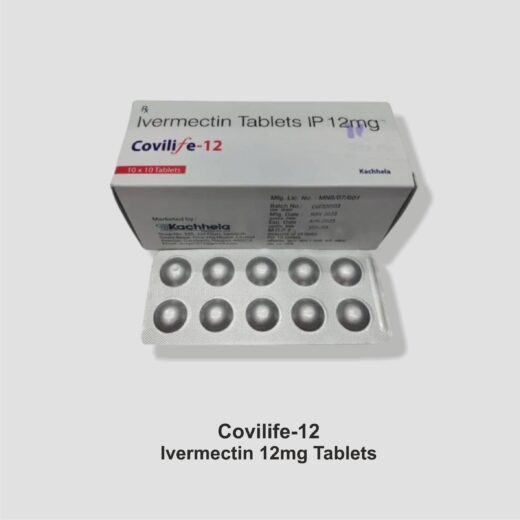
Covilife-12 (Ivermectin 12mg) Tablet
Brand name – Covilife 12mg
Generic name – Ivermectin 12mg
Indications – Antiparasitic Medication
Manufacturer – Kachhela Medex Pvt Ltd
Packaging – 10 x 10 Tablets in 1 Pack
Delivery Time – 6 To 15 Days