Ivermectin Cream for Rosacea: An Evidence-Based Treatment for Inflammatory Lesions
If persistent red bumps and pimple-like lesions are making rosacea difficult to control, ivermectin cream for rosacea is one prescription treatment worth discussing with a dermatologist.
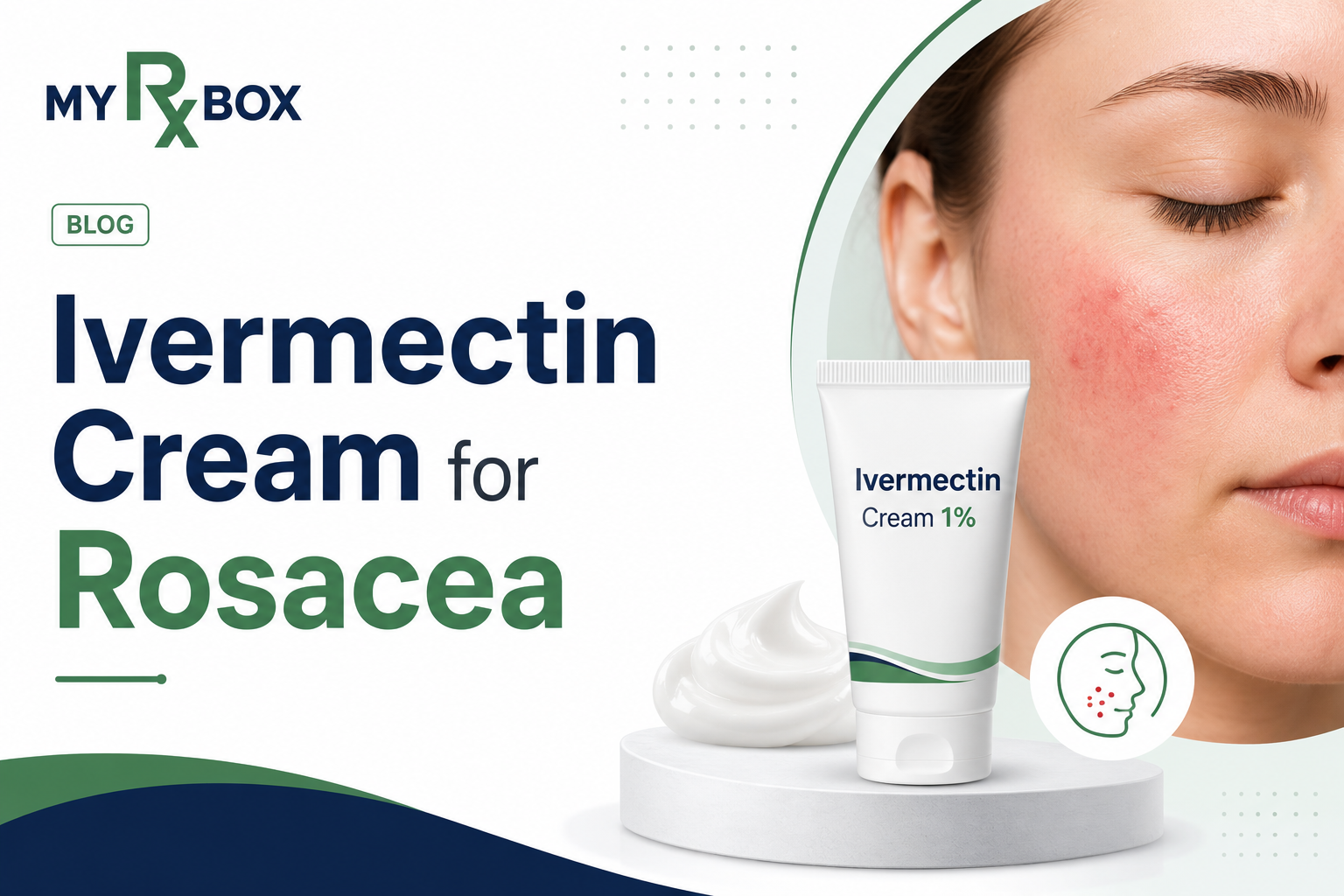
Ivermectin 1% cream, sold under the brand name Soolantra and also available in generic prescription formulations in the United States, is specifically indicated for treating the inflammatory lesions of rosacea. The FDA-approved prescribing information describes these lesions as the bumps and pimples associated with rosacea rather than simply facial redness alone.
That distinction matters.
Rosacea can cause several different problems, including facial redness, visible blood vessels, flushing, burning, swelling, papules, pustules and sometimes eye symptoms. A treatment that works well for inflammatory bumps may not necessarily eliminate persistent redness or visible blood vessels.
The National Institutes of Health explains that rosacea is a chronic condition with no single cure. Instead, doctors generally tailor treatment to the individual’s symptoms and may combine medication with trigger avoidance and skin-care measures.
For people whose rosacea includes inflammatory papules and pustules, topical ivermectin has become an established prescription option.
This guide explains what ivermectin cream does, how it is used, what clinical research shows, possible side effects, how it compares with other rosacea treatments and what patients should discuss with their healthcare provider.
Medical disclaimer: This article is for educational purposes and is not a substitute for diagnosis or treatment from a licensed healthcare professional. Ivermectin 1% cream is a prescription medication in the United States. Use it only as directed by your healthcare provider.
What Is Rosacea?
Rosacea is a long-term inflammatory skin condition that most commonly affects the central face.
Symptoms vary considerably from one person to another. According to MedlinePlus, rosacea may involve facial redness, easy flushing, visible small blood vessels, acne-like bumps, swelling, burning or stinging and irritated or watery eyes.
The condition can affect areas such as the:
- Cheeks
- Nose
- Forehead
- Chin
Some people mainly experience flushing and persistent redness. Others develop inflammatory papules and pustules that can resemble acne.
That latter pattern is particularly relevant when discussing ivermectin cream for rosacea.
Is rosacea the same as acne?
No.
Although inflammatory rosacea can produce bumps that look similar to acne, rosacea and acne are different disorders. Acne primarily involves plugged hair follicles, excess oil, dead skin cells and associated inflammation. Rosacea has a different clinical pattern and can include prominent flushing, redness and visible blood vessels.
This is why self-diagnosing “acne rosacea” and treating it like ordinary acne may lead to disappointing results or irritated skin.
A dermatologist can help distinguish rosacea from acne, perioral dermatitis and other conditions that may resemble it. MedlinePlus notes, for example, that perioral dermatitis can resemble acne or rosacea.
What Is Ivermectin 1% Cream?
Ivermectin is a medication with antiparasitic properties. In dermatology, a 1% topical ivermectin cream is FDA-approved for inflammatory lesions associated with rosacea.
Each gram of Soolantra contains 10 mg of ivermectin, equivalent to a 1% concentration.
The important point is that topical ivermectin cream is different from ivermectin tablets.
Do not substitute oral or veterinary ivermectin for prescription ivermectin cream.
The FDA-approved topical product is formulated specifically for use on the skin and should be used according to its prescribing instructions.
What Is Soolantra Cream Used For?
Soolantra is a brand-name form of ivermectin 1% cream.
Its FDA-approved indication is straightforward: treatment of inflammatory lesions of rosacea.
These inflammatory lesions commonly include rosacea-related papules and pustules.
Therefore, someone searching for:
- ivermectin rosacea treatment
- rosacea bumps treatment
- rosacea papules treatment
- rosacea pustules treatment
- cream for papulopustular rosacea
may encounter ivermectin 1% cream as one of the prescription therapies a dermatologist may consider.
However, ivermectin cream should not be presented as a universal treatment for every manifestation of rosacea.
For instance, persistent facial redness and visible blood vessels may require a different approach. NIAMS notes that rosacea treatment can include several types of topical medication as well as laser and light-based procedures, depending on the symptoms being treated.
How Does Ivermectin Cream Work for Rosacea?
The precise mechanism by which Soolantra improves rosacea has not been definitively established.
The current prescribing information specifically states that its mechanism of action in treating rosacea lesions is unknown.
Researchers have proposed several explanations, including anti-inflammatory activity and effects involving Demodex mites, microscopic organisms that normally live on human skin.
The earlier American Family Physician review that prompted this article discussed both anti-inflammatory and antiparasitic effects as possible explanations for ivermectin’s activity in rosacea.
However, it is better from an evidence and medical-marketing standpoint to avoid saying that Demodex mites “cause rosacea” or that ivermectin works simply by “killing the cause.”
Rosacea is a complex inflammatory disease, and its underlying biology is not explained by one factor alone.
Does Ivermectin Cream Actually Work for Rosacea?
Clinical evidence supports ivermectin 1% cream for inflammatory rosacea lesions.
The FDA prescribing information describes two randomized, double-blind, vehicle-controlled trials involving 1,371 adults with inflammatory rosacea. Participants applied either Soolantra or the vehicle cream once daily for 12 weeks. Most participants had moderate rosacea at baseline, while the remainder had severe disease.
The primary outcomes assessed the proportion of patients reaching “clear” or “almost clear” status and changes in inflammatory lesion counts.
According to the FDA label, Soolantra performed better than vehicle on these primary endpoints, with treatment differences beginning to emerge during the study period.
A published Phase III clinical trial similarly concluded that ivermectin 1% cream was effective and well tolerated for inflammatory lesions of papulopustular rosacea.
Evidence reviews have also supported topical ivermectin as an effective rosacea treatment. A Cochrane-derived review found topical ivermectin more effective than vehicle in two trials and slightly more effective than topical metronidazole in one comparative study.
More recent reviews continue to list ivermectin among the topical treatments used for rosacea, alongside therapies such as metronidazole and azelaic acid.
The practical takeaway
For the appropriate patient with inflammatory rosacea lesions, ivermectin cream has meaningful clinical evidence behind it.
That does not mean every person will respond identically or that it cures rosacea permanently.
Rosacea is usually a chronic condition requiring ongoing management.
How to Use Ivermectin Cream for Rosacea
The FDA-approved instructions for Soolantra call for application to affected areas of the face once daily.
The prescribing information recommends a pea-sized amount for each affected facial area:
- Forehead
- Nose
- Chin
- Left cheek
- Right cheek
The cream should be spread smoothly in a thin layer while avoiding the eyes and lips.
Important application precautions
Soolantra is intended for topical skin use only.
It should not be used orally, in the eyes or intravaginally.
Patients should follow the exact instructions supplied by their prescriber and pharmacy rather than changing the dose because symptoms have improved or because they want faster results.
Using additional cream does not automatically produce faster improvement and may increase irritation.
How Long Does Ivermectin Cream Take to Work?
Rosacea treatment usually requires patience.
The pivotal Soolantra trials evaluated patients over 12 weeks, and the FDA prescribing information reports that treatment differences compared with vehicle were observed during that treatment period.
NIAMS similarly advises that rosacea improvement is generally gradual and may take several months.
Therefore, people using ivermectin cream should not automatically conclude that it has failed after only a few applications.
At the same time, worsening symptoms, significant irritation or uncertainty about the diagnosis should be discussed with a healthcare professional rather than simply continuing treatment indefinitely.
Ivermectin Cream Before and After: What Changes Should You Expect?
Many people searching online for “ivermectin cream rosacea before and after” want to know exactly what improvement should look like.
For patients responding to treatment, the most relevant changes would generally involve the symptoms the medicine is designed to treat:
- Fewer inflammatory papules
- Fewer pustules
- Reduced prominence of inflammatory facial bumps
- An overall improvement in inflammatory lesion severity
Expectations around redness should be more cautious.
Rosacea includes multiple features, and a reduction in inflammatory bumps does not guarantee that persistent background redness, flushing or visible blood vessels will disappear.
Treatment should therefore be matched to the individual rosacea phenotype rather than relying on one cream to address every symptom. Government guidance likewise emphasizes individualized treatment because rosacea symptoms differ between patients.
Ivermectin Cream vs. Metronidazole for Rosacea
Metronidazole is another established topical treatment for rosacea.
Clinical research has compared ivermectin 1% cream with topical metronidazole. Published comparative research reported favorable results for ivermectin in patients with inflammatory rosacea, while broader evidence reviews have described ivermectin as slightly more effective in the comparative study available to them.
However, that does not mean ivermectin is automatically the best choice for everyone.
The right medication may depend on:
- Rosacea symptoms
- Severity
- Previous treatments
- Skin sensitivity
- Cost and insurance coverage
- Other medical conditions
- Pregnancy or breastfeeding considerations
- Patient and clinician preferences
Instead of treating “ivermectin vs. metronidazole” as a universal winner-versus-loser comparison, the more useful question is which treatment best matches the patient’s particular form of rosacea.
Ivermectin Cream vs. Azelaic Acid for Rosacea
Azelaic acid is another commonly searched rosacea treatment.
Trend reflects this clearly: “azelaic acid rosacea,” “best azelaic acid for rosacea,” and “azelaic acid for rosacea” are all prominent or rising queries.
MedlinePlus states that topical azelaic acid gel and foam are used to help clear the bumps, lesions and swelling associated with rosacea.
Ivermectin and azelaic acid are therefore both relevant options for inflammatory rosacea, but they are different medications.
A dermatologist may consider the patient’s symptoms, tolerance, previous response and overall treatment plan when selecting between them.
Some patients may also need a broader regimen targeting multiple rosacea features rather than a single medication.
Can Ivermectin Cream Treat Facial Redness?
This requires an important distinction.
Ivermectin cream is FDA-approved for inflammatory lesions of rosacea—not specifically as a stand-alone treatment for persistent facial erythema.
Someone whose main concern is persistent redness without inflammatory papules or pustules may need another therapeutic approach.
NIAMS notes that rosacea treatment can involve topical medications with different mechanisms as well as lasers or intense pulsed light for visible blood vessels.
Therefore, content claiming that ivermectin “eliminates rosacea redness” would be both medically oversimplified and poor E-E-A-T practice.
A stronger and more accurate message is:
Ivermectin 1% cream targets inflammatory rosacea lesions. A dermatologist can determine whether additional treatment is needed for persistent redness, flushing or visible blood vessels.
Side Effects of Ivermectin 1% Cream
Soolantra is generally used topically, but it can still cause side effects.
The FDA-approved labeling identifies skin burning and skin irritation among the adverse reactions reported in controlled clinical trials. Postmarketing reports have also included contact dermatitis and allergic dermatitis.
Patients should contact a healthcare professional if they develop significant or persistent irritation or symptoms suggestive of an allergic reaction.
Because rosacea itself can cause burning and sensitivity, changes in symptoms should be evaluated in context rather than automatically assumed to be either the medication or the disease.
Can You Use Ivermectin Cream During Pregnancy?
Patients who are pregnant, planning pregnancy or breastfeeding should discuss ivermectin cream with their healthcare provider before use.
The current FDA label states that available information about ivermectin, including Soolantra cream, in pregnant women is insufficient to establish a drug-associated risk of major birth defects, miscarriage or other adverse outcomes.
The patient information also advises people to tell their healthcare provider if they are pregnant, planning to become pregnant, breastfeeding or planning to breastfeed.
This is an important area where older internet articles can be misleading because pregnancy labeling standards and available evidence evolve.
Use current prescribing information rather than relying solely on older drug-review terminology.
Is Ivermectin Cream Safe for Children?
The FDA-approved patient information states that it is not known whether Soolantra is safe and effective in children.
Parents should therefore never use another household member’s prescription ivermectin cream on a child simply because a facial rash appears similar to rosacea.
Children can develop several facial conditions that resemble acne or rosacea, and appropriate diagnosis matters.
Rosacea Skin Care Matters Alongside Medication
Medication is only one component of rosacea management.
Trend shows increasing search interest in terms such as “rosacea skin care,” “best sunscreen for rosacea,” “rosacea triggers” and “what triggers rosacea.”
Those searches reflect an important reality: everyday triggers and skin-care choices can influence symptoms.
NIAMS recommends identifying personal triggers and notes several commonly reported examples, including:
- Sun exposure
- Emotional stress
- Hot or cold weather
- Strong wind
- Strenuous exercise
- Alcohol
- Hot baths
- Spicy foods
- Very hot foods or beverages
Not everyone has the same triggers.
Keeping a simple symptom diary can help identify patterns, especially when starting a new rosacea treatment.
A gentle skin-care routine can also make topical treatment easier to tolerate. Avoid introducing several aggressive products simultaneously because irritation can make it difficult to determine whether the prescription medication or another product is responsible.
Who May Be a Candidate for Ivermectin Cream?
A healthcare professional may consider topical ivermectin when a patient has rosacea with clinically significant inflammatory lesions.
That decision normally starts with confirming the diagnosis.
There is no single laboratory test for rosacea; NIAMS explains that physicians generally diagnose it based on skin and eye appearance plus medical history and may investigate other conditions when necessary.
This is particularly important for people searching for ivermectin after seeing before-and-after photos online.
Similar-looking facial bumps can result from different conditions.
Prescription treatment should follow diagnosis rather than the other way around.
When Should You See a Dermatologist?
Consider seeking professional evaluation if:
- Facial redness or bumps persist
- Your symptoms are worsening
- Over-the-counter products repeatedly irritate your skin
- You have painful pustules or significant inflammation
- You are unsure whether you have rosacea or acne
- Your eyes are red, irritated, dry or painful
- Your nose or other facial skin is becoming thicker
- Your existing rosacea treatment is no longer controlling symptoms
Rosacea can involve the eyes, and NIAMS notes that ophthalmologists may participate in care when eye problems occur.
Early, accurate diagnosis can also prevent months of experimenting with products designed for the wrong condition.
Why Ivermectin 1% Cream Remains an Important Rosacea Treatment
Ivermectin cream occupies a useful position in rosacea care because it offers a once-daily topical prescription treatment specifically indicated for inflammatory rosacea lesions.
Its advantages may include:
- FDA-approved indication for inflammatory lesions of rosacea
- Once-daily application
- Evidence from randomized clinical trials
- A non-antibiotic topical treatment approach
- Availability as brand-name Soolantra and prescription ivermectin 1% formulations
At the same time, responsible treatment expectations matter.
Ivermectin is not a universal cure for rosacea. It does not necessarily address every component of the disease, and not every patient will respond in exactly the same way.
That is why a personalized dermatology plan remains important.
Frequently Asked Questions About Ivermectin Cream for Rosacea
Is ivermectin cream good for rosacea?
Ivermectin 1% cream is FDA-approved for treating inflammatory lesions associated with rosacea and has demonstrated efficacy in randomized clinical trials.
Whether it is appropriate for a particular patient depends on that person’s symptoms and medical history.
Is Soolantra the same as ivermectin cream?
Soolantra contains ivermectin at a concentration of 1%. It is a prescription topical ivermectin product indicated for inflammatory rosacea lesions.
How often is ivermectin cream applied?
The FDA-approved Soolantra instructions state that affected facial areas are treated once daily using a thin layer.
Follow the instructions from your own healthcare provider.
Can ivermectin cream cure rosacea?
Rosacea currently has no cure. Treatment is intended to control symptoms, reduce complications and improve quality of life.
Ivermectin can help treat inflammatory lesions but should not be marketed as a permanent cure.
Can you use ivermectin cream around the eyes?
The prescribing information instructs patients to avoid the eyes and lips. Soolantra is not intended for ophthalmic use.
Patients with ocular rosacea should seek medical advice regarding appropriate eye treatment.
Does ivermectin cream reduce Demodex mites?
Ivermectin has antiparasitic properties, and Demodex has been investigated in rosacea. However, the FDA prescribing information states that the exact mechanism by which Soolantra treats rosacea lesions is unknown.
Therefore, it is more accurate to describe Demodex as one proposed part of the mechanism rather than claiming that mites are the sole cause of rosacea.
Is ivermectin cream available without a prescription?
Soolantra is a prescription medication in the United States. Patients interested in topical ivermectin for rosacea should discuss appropriate treatment with a licensed healthcare professional.
The Bottom Line: Should You Consider Ivermectin Cream for Rosacea?
For people dealing with persistent inflammatory bumps and pustules from rosacea, ivermectin cream for rosacea is an established prescription treatment backed by FDA-reviewed clinical trials.
Soolantra 1% cream is specifically indicated for inflammatory rosacea lesions and offers convenient once-daily topical application.
However, rosacea is not one uniform condition.
A person whose biggest concern is flushing or persistent redness may require a different treatment from someone whose main problem is papules and pustules. Some patients need combination therapy, while others benefit significantly from trigger management and gentle skin care alongside prescription medication.
The best next step is therefore not to self-diagnose based on photographs or social-media recommendations.
If rosacea bumps, pustules or facial inflammation are affecting your skin, ask a dermatologist or other qualified healthcare professional whether prescription ivermectin 1% cream is appropriate for your symptoms.
With accurate diagnosis and a targeted treatment plan, inflammatory rosacea can often be managed effectively—even though the condition itself tends to be chronic.